

musteline
- noun
- /ˈmʌstɪlaɪn/
- Specialized
- The musteline is well adapted for hunting small mammals in dense undergrowth.
Examples
-
Curious children watched as the zookeeper explained how the musteline hunts for its food.
-
Several species of musteline are found in both Europe and North America.
-
The musteline creatures are fascinating to observe in the wild.
-
A musteline family can often be found near water sources.
-
The musteline animal, such as the otter, plays an important role in its ecosystem.
-
Many people enjoy watching musteline species, like weasels and badgers, in documentaries.
-
The natural behaviors of musteline mammals are often studied by wildlife biologists.
Synonyms


 1
8.6
1
8.6
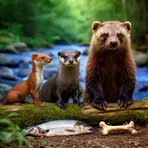
A small to medium mammal like a weasel or otter that has fur and eats meat

A meat-eating mammal like a weasel or otter with a long slender body
Compounds
- Specialized
A meat-eating mammal like a weasel or otter with a long slender body
Surface Forms
Morphology
musteline = mustelid (opaque) = mustel + ine
The word is formed by a regular derivation: the combining stem relating to Mustelidae plus the productive suffix '-ine' meaning 'relating to' or forming nouns/adjectives.
Etymology
Musteline comes from the Latin mustela meaning 'weasel', and that word comes from mus meaning 'mouse', so you can imagine a weasel as a 'little mouse'. That's why musteline refers to animals of the weasel family, like weasels, otters, badgers and minks.