

musk thistle
- noun
- /mʌsk ˈθɪsəl/
- UK
- Conservationists are concerned about the spread of musk thistle in local grasslands.
Examples
-
Beekeepers appreciate musk thistle for the abundant nectar it provides.
-
The field was covered with musk thistle, its crimson heads nodding in the breeze.
-
The musk thistle blooms beautifully in the summer.
-
Have you seen a musk thistle before?
-
The musk thistle is known for attracting many pollinators with its sweet nectar.
-
Farmers often try to control musk thistle populations due to their invasive nature.
-
In the summer, gardens filled with musk thistle can be a beautiful sight with their striking red flowers.
Synonyms

A spiny plant from Europe and Asia with drooping red-purple flower heads that grows wild in fields
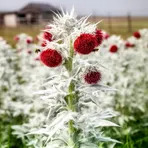
A spiny plant with soft white leaves and drooping red flower heads
Surface Forms
Morphology
The meaning ('a thistle with a musky scent') is directly and compositionally derived from 'musk' (a scent) modifying 'thistle' (a spiny plant); the attributive noun pattern is regular in English. This straightforward noun–noun compound is cross-linguistically common, so a B1 learner who knows both constituents can infer the MWE's meaning.
Etymology
Musk thistle was named for its strong musk smell and its thistle shape, with sharp leaves and nodding purple flower heads. So the name gives a clear picture of a prickly, musky-scented plant that often attracts bees.

