

musical time
- noun
- Specialized
- Each song has its own unique musical time, which guides the rhythm and flow of the melody.
Examples
-
Understanding musical time helps musicians synchronize their playing with one another.
-
Each instrument is like a musical time machine, playing exactly the same music that our grandparents heard when the instruments were new.
Blog text (20) -
The conductor emphasized the importance of keeping a steady musical time during the performance.
Synonyms

 907
7.3
907
7.3

A regular pattern of beats in music
 301
3.3
301
3.3
A regular pattern of sounds and movements, often in music or dance
 29
6.0
29
6.0
A regular pattern of strong and weak beats in a poem or song
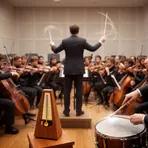
A regular pattern of beats in a song or dance that gives music its timing

A steady beat in music you can feel in your body or emotions
How Steady

Surface Forms
Morphology
The meaning is directly and compositionally built from 'musical' (related to music) + 'time' (the pattern or meter), so a learner who knows both words can infer it refers to the beat or metrical pattern that organizes music. This noun–noun combination is a common, literal conceptualization found across languages (e.g., Spanish 'tiempo musical'), making it transparent to B1 learners.
Etymology
Musical time comes from the image of a conductor or dancer showing a steady beat so everyone stays together. The word musical points to music and the word time points to the regular 'beat' or 'rhythm', so the phrase now means the 'beat' that helps arrange the notes.