

mushroom coral
- noun
- /ˈmʌʃrum ˈkɔrəl/
- Specialized
- Marine biologists study how mushroom coral populations respond to changing ocean temperatures.
Examples
-
Divers marveled at the vibrant colors of the mushroom coral growing on the reef.
-
Don't touch the mushroom coral when snorkeling!
-
A single mushroom coral can reach impressive sizes despite being unattached to rocks.
-
Look at that large mushroom coral over there!
-
The mushroom coral had a unique, disk-shaped body that blended perfectly with the ocean floor.
-
Many divers are fascinated by the beautiful structures formed by mushroom corals in the tropical reefs.
-
You can find mushroom corals in shallow waters where they thrive in the sunlight.
Synonyms
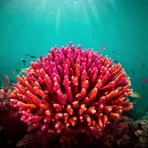
 55
2.6
55
2.6

A small sea animal that makes hard reefs and skeletons used in jewelry
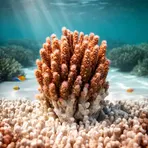

 1
6.0
1
6.0
A sea animal that makes a hard skeleton and builds reefs

A flat, round coral that lives alone on reefs in warm seas near Asia and Australia
Surface Forms
Morphology
The compound 'mushroom coral' is transparently built from 'mushroom' (indicating a mushroom-like shape) + 'coral' (the marine animal), so its meaning — a coral that is shaped like or resembles a mushroom — is directly inferable. Shape-based noun compounds of this type are cross-linguistically common and follow standard composition patterns, so a B1 learner who knows both constituents would readily understand the term.
Etymology
Mushroom coral is named because the coral's flat, round body looks like a mushroom cap and it often sits alone on the sea floor, not attached to rocks. So the image of a lone, cap-shaped coral helps you remember it is a 'flat, disk-shaped coral that lives alone'.