
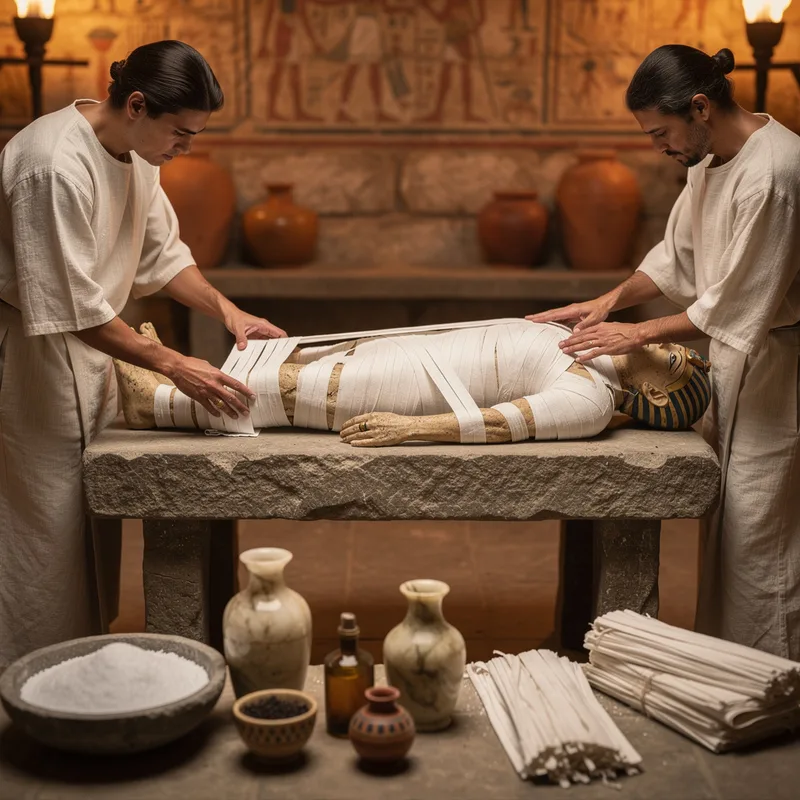
mummification
 6
9.6
6
9.6

- noun
- /ˌmʌməfɪˈkeɪʃən/
- The ancient Egyptians perfected the art of mummification to preserve their pharaohs for the afterlife.
- mummification techniques
- used in mummification
Examples
-
Altogether, these practices indicate the beginning of that hallmark of Egyptian civilization—mummification.
Academic text (2003) -
Ours was an unexpected discovery in a working-class cemetery from about 3500 B.C. because the next evidence of mummification we have is five centuries later and from a king's tomb.
Academic text (2003) -
And the art of mummification was born.
-
There is nothing about the mummification, such as it was, that allows us to date Unknown Man E.
Academic text (2006) -
Yet there was some attempt at mummification.
Academic text (2006) -
It's very important for mummification and resurrection.
-
In the process of mummification, the internal organs were buried separately.
Fiction book (1992) -
We performed the first human mummification in the Egyptian style since the time of the pharaohs.
-
The digital images can now be pored over by specialists interested in Meresamun's health and mummification.
Academic text (2009) -
For later periods, when there are texts to guide us, we know that in death all Egyptians became Osiris, and the mummification of the body was viewed as a reenactment of the events in Osiris' death.
Academic text (2003)
Synonyms

A process that keeps a dead body from rotting by using chemicals
How Preserved

Surface Forms
Morphology
Etymology
The word mummification comes from mummy, which originally named a dark substance used to preserve dead bodies in ancient times. The ending -fication means 'making' or 'process', so mummification is the process of making a mummy.