
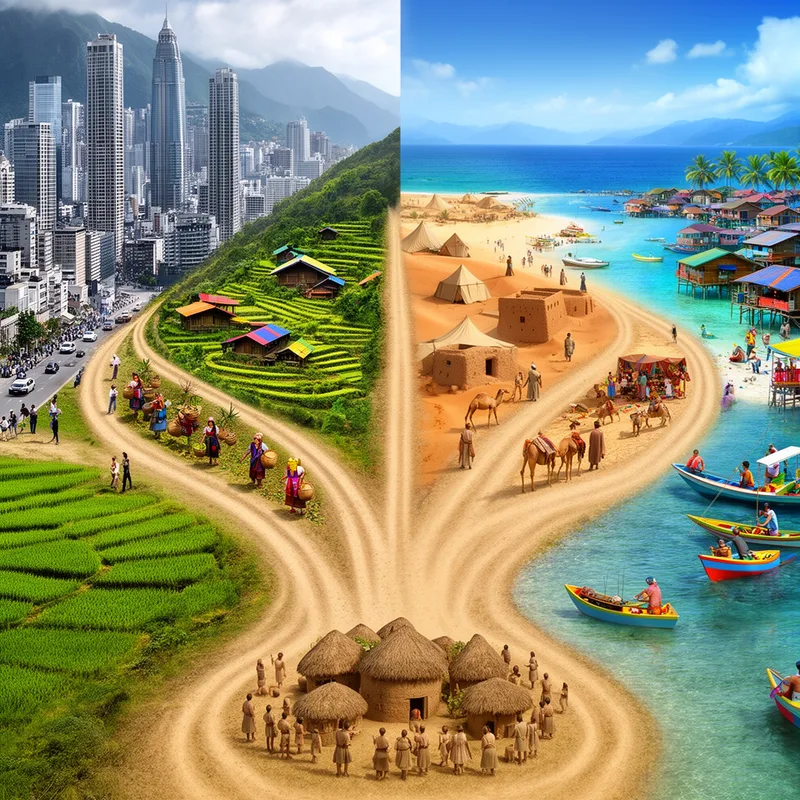
multilinear evolution
- noun
- /ˌmʌltiˈlɪniər ˌɛvəˈluːʃən/
- Formal
- The concept of multilinear evolution challenges earlier assumptions of a universal trajectory for all cultures.
Examples
-
Steward's theory of multilinear evolution emphasizes the diversity of cultural development across societies.
-
How does multilinear evolution differ from unilinear theories?
-
Recent anthropological research often references multilinear evolution when analyzing societal changes.
-
The concept of multilinear evolution challenges traditional views of cultural development.
-
Recent anthropological research often references multilinear evolution when analyzing societal changes.
-
Steward's theory of multilinear evolution emphasizes the diversity of cultural development across societies.
-
The concept of multilinear evolution challenges earlier assumptions of a universal trajectory for all cultures.
Synonyms

A way of studying how different societies change in similar ways over a long time

A way of studying how unrelated cultures change in similar ways over time
Surface Forms
Morphology
The phrase is directly compositional: 'multilinear' (many lines/paths) modifies 'evolution' (development), so the overall meaning — evolution occurring along multiple independent lines — is derivable from the constituent meanings. Although somewhat academic, the morphology (multi- + linear) and the noun 'evolution' make the concept predictable to a learner who knows both words.
Etymology
The noun multilinear evolution uses the parts multi (many), linear (lines or paths) and evolution (slow change). Imagine many separate roads starting from the same place, with each society following its own road. That's why the term means cultures change along 'different paths' rather than one single route.

