
muley
9.9
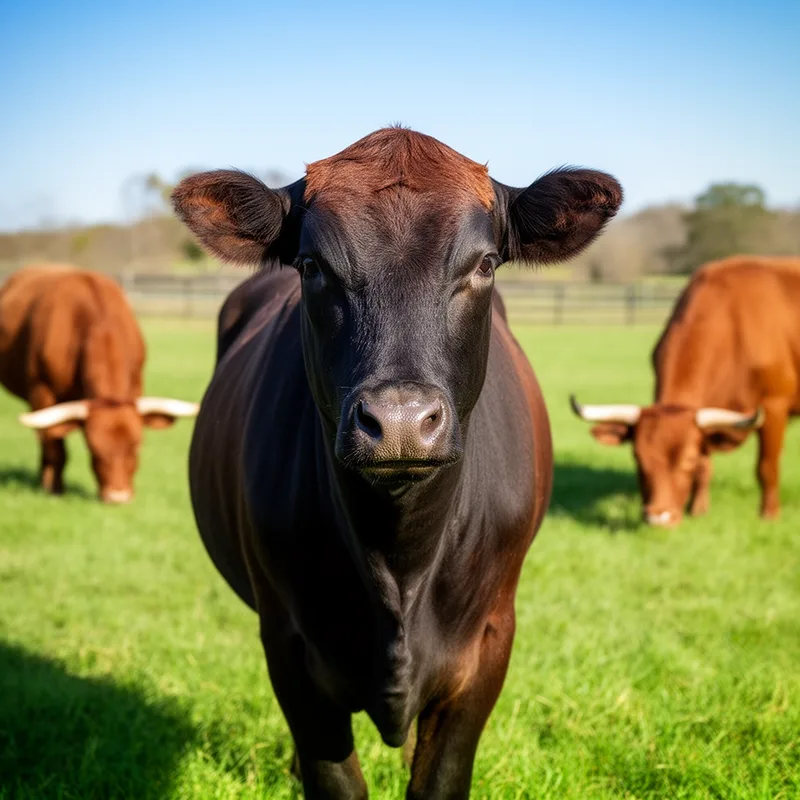
Animals that have no horns, especially cattle
- adjective
- /ˈmjuːli/
- UK
:
sin cuernos
- A muley bull stood quietly in the pasture, lacking the horns of the others.
Examples
-
Some breeds are naturally muley, making them safer for ranch workers.
-
The farmer raised a muley cow on his ranch.
-
The farmer preferred muley cattle because they were easier to handle.
-
Have you ever seen a muley calf?
-
The farmer preferred muley cattle because they were easier to handle.
-
A muley bull stood quietly in the pasture, lacking the horns of the others.
-
Some breeds are naturally muley, making them safer for ranch workers.
Synonyms
hornless
vsmuley


 1
4.0
1
4.0
An animal without horns naturally or after they are removed
is naturally without horns rather than lacking them from removal
Surface Forms
muley positive
Morphology
Etymology
Muley as an adjective for hornless animals is a helpful way to remember an older idea of 'bald' or 'bare'—a muley animal has a 'bare' head without horns. That's why farmers call cattle that are naturally without horns muley.