

mulberry fig
- noun
- /ˈmʌlˌbɛri fɪg/
- The mulberry fig is mentioned several times in biblical texts as the sycamore tree.
Examples
-
Clusters of mulberry figs can be seen growing directly from the branches near the trunk.
-
Ancient Egyptians sometimes planted the mulberry fig along irrigation canals for shade and food.
-
The mulberry fig tree provides shade in the hot sun.
-
Many mulberry figs grow near the riverbank.
-
Ancient Egyptians sometimes planted the mulberry fig along irrigation canals for shade and food.
-
Clusters of mulberry figs can be seen growing directly from the branches near the trunk.
-
The mulberry fig tree provides shade in the hot sun.
Synonyms

 10
4.8
10
4.8

A large tree with pale, peeling bark and broad leaves that gives good shade
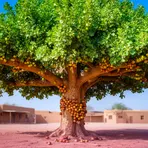
A large tree with thick branches from Africa and southwestern Asia that produces small edible figs

A large spreading tree from Africa and Asia that makes small edible but not very tasty figs
Surface Forms
Morphology
The compound follows a straightforward noun+noun pattern where 'mulberry' modifies 'fig', so a learner who knows both words will likely infer this refers to a type of fig or fig tree with some mulberry-like association. However, the precise botanical identity (Ficus sycomorus) and specialised characteristics are not fully predictable from the constituents, making the meaning only partly transparent to B1 learners.
Etymology
Mulberry fig is the name for a large, wide tree people often call the 'sycamore' in old stories; its small figs grow in clusters near the trunk and branches and looked a little like mulberry, so people put mulberry and fig together in the name. That's why the name now refers to a big, spreading tree with groups of edible figs.