
mukanda
- noun
- South African
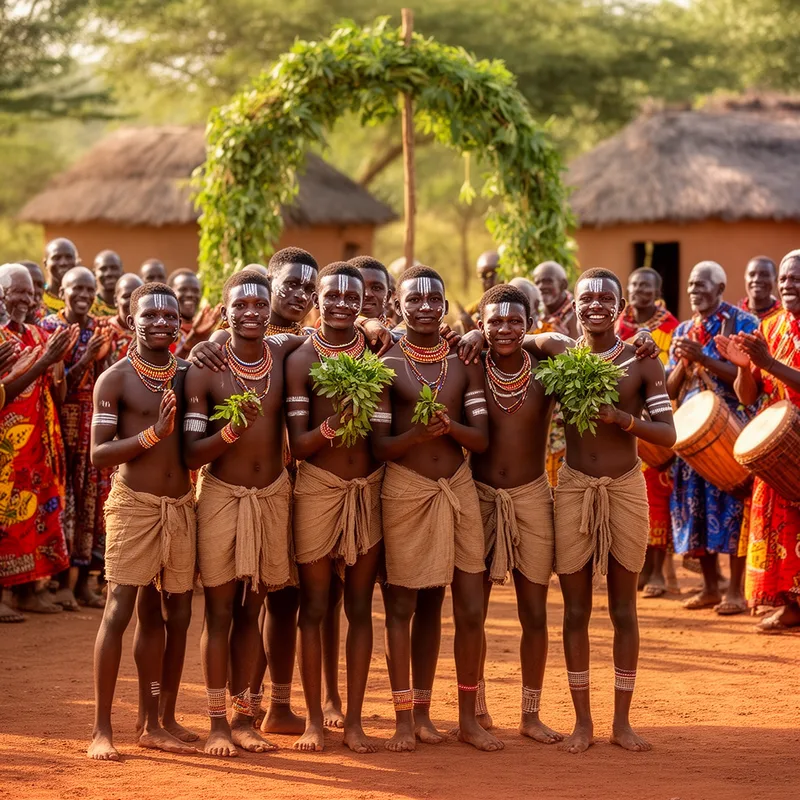
- The mukanda graduates danced proudly, showcasing their newly acquired skills and responsibilities after the initiation ritual.
Examples
-
This formal stance is still assumed by chiefs, mukanda graduates, akishi, and diviners in dances that mark important transitions in life.
Academic text (1999) -
In the case of male initiation, walking sticks are carried by mask characters and mukanda graduates to signify their long and arduous travel from the world of the dead to the world of the living (Jordan 1998a:99).
Academic text (1999) -
After this second impregnation, the son is in the male womb of mukanda, yet the mother must still safeguard his life as she did when pregnant with him.
Academic text (1998) -
The influence of outside models, advanced through scholarly writing, Zambian textbooks, and school teachers, has resulted in a simplification of makishi as either masked figures that appear at mukanda or ancestral spirits.
Academic text (1998) -
During the ceremony, the chiefs honored the young men who had completed their mukanda with traditional songs and blessings.
-
The group of boys became mukanda after enduring the initiation process that taught them about their culture and role in society.
Surface Forms
Etymology
Mukanda comes from Central African Bantu languages and can also mean the group of boys who have finished the initiation. So calling those young men the mukanda shows they share the same ceremony and new status.

