
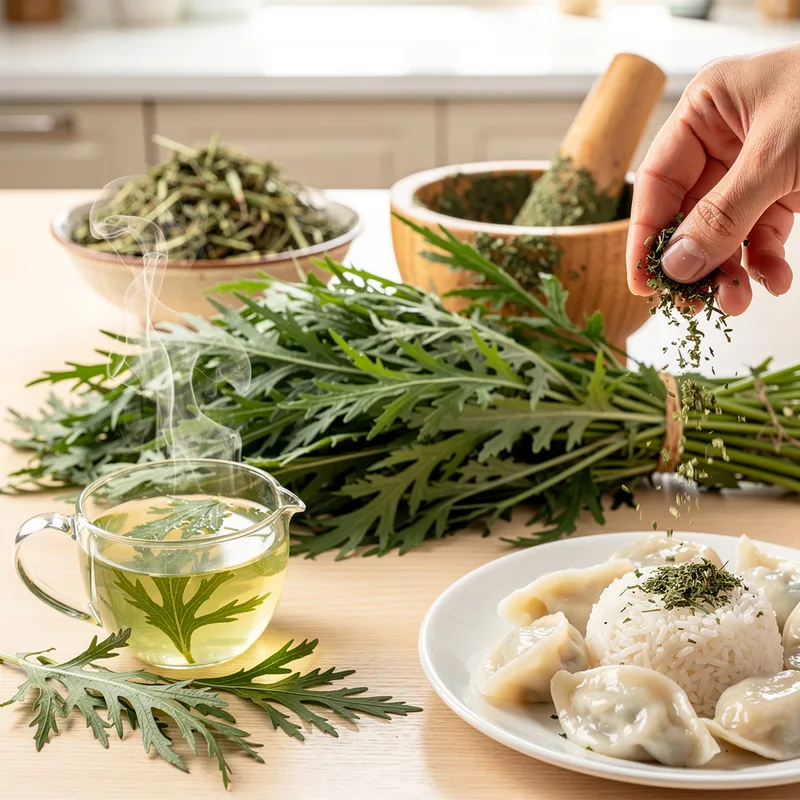
mugwort
 3
9.0
3
9.0

- noun
- /ˈmʌɡˌwɜrt/
- What do you herald via the golden horizons, the flaming mugwort, the flutes strangled by the wind?
- mugwort, a fragrant herb
Examples
-
A mugwort special.
-
Chernobyl, which comes from the Ukrainian word "chornobyl," translates into wormwood (or its close relative mugwort).
Blog text (12) -
...a little mugwort will fix that right up.
-
When it was over, I got mugwort from my bag to ease her belly.
Fiction book (1993) -
Surprisingly, next thing I'm going to use is the mugwort calming cream from his entry, which is what I'm sorry to do.
-
It is a rice cake made of mugworts with dough kneaded in a flat, round shape and has nothing to do with dogs!
Blog text (15) -
- Just some leaves of the adder's tongue with distilled water of horsetail and a pinch of mugwort.
-
She added dried mugwort to her herbal tea for a calming effect.
-
In traditional medicine, mugwort is often used to promote digestion and relieve discomfort.
-
The recipe called for mugwort to enhance the flavor of the roasted vegetables.
Synonyms
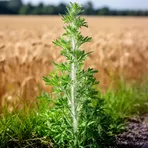
A common European herb called mugwort with hairy stems and green leaves

A European herb with green leaves and small reddish brown flowers
Compounds

A plant with soft white leaves that smell strong and lives for many years in the southwestern United States
Surface Forms
Morphology
Etymology
Mugwort is made of two old parts: mug and wort, where wort means 'plant' and mug may refer either to a 'midge' (a small fly) because the herb was used against insects, or to a 'mug' (cup) because people used it to flavor drinks; so the name points to a useful plant used in cooking and herbal medicine.