
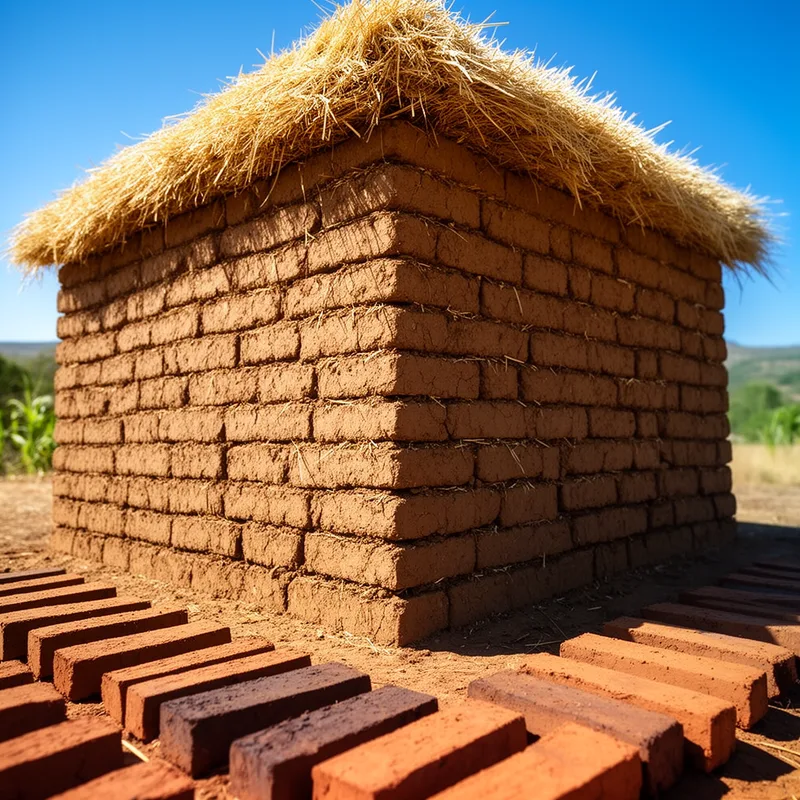
mud-brick


 1
4.8
1
4.8
- adjective
- /mʌd brɪk/
- Starting with the 1st Dynasty, which began just over a century later, senior court officials built a line of large mud-brick tombs overlooking the capital.
Examples
-
At the top of this rampart was the main city wall, also made of mud-brick, this one more than 25 feet high and 10 feet thick.
-
Extending more than 120 miles from the Caspian Sea eastward, the mud-brick wall was erected earlier than the stone fortifications at Derbent, perhaps to secure the empire against the threat posed by the Hepthalites.
Academic text (2008) -
In places, their mud-brick towers still stand to a height of nearly fifty feet.
Academic text (2004) -
Hatshepsut (1472-1457) built it some 75 years earlier, possibly replacing an older mud-brick structure.
Academic text (2006) -
Just 15 miles south of Derbent, a massive mud-brick fortress called Torpakh-Kala sits in a restricted military zone near the border with Azerbaijan.
Academic text (2008) -
Three generations of the royal family, starting with Tupkish and Uqnitum, lived in the mud-brick palace built around 2250 B.C. just west of a slightly older temple.
Academic text (2008) -
At Çatalhöyük, a Neolithic site in Turkey, families packed their mud-brick houses close together and traipsed over roofs to climb into their rooms from above.
Academic text (2006) -
The mud-brick monument towered 90 feet over a broad plaza that served as the religious and political nerve center of a civilization known as Sicn that lasted from A.D. 800 to 1375 in northern Peru.
Academic text (2007) -
Sand-colored mud-brick houses with balconies, latticed windows, and flat roofs lined the old city's narrow, winding alleys and waterfront.
Fiction book (1996) -
The village features several durable mud-brick houses that have stood the test of time.
Synonyms
 440
1.0
440
1.0
A hard rectangular block of baked clay used to build walls or paths
 16
2.9
16
2.9
A hollow rectangular block of concrete used to build walls
 1
3.1
1
3.1
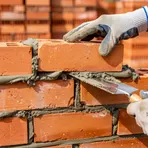
A building material made of bricks joined with mortar
 1
2.7
1
2.7
A brick made from wet earth that gets hard and is used to build walls
 1
5.0
1
5.0
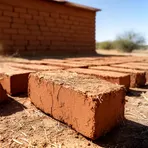
A brick made from clay and straw that dries in the sun for building in hot dry places
 1
4.2
1
4.2
Made of red bricks, like many houses and older buildings

A brick made from sand and lime instead of clay, usually light gray and used for building
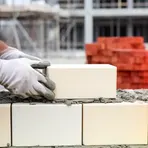
A type of brick made from sand and lime used for building

A brick made from sand and lime, usually light gray in color
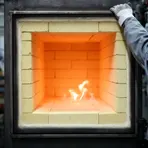
A strong brick that can stand very high heat and line furnaces or fireplaces
How Durable

Surface Forms
Morphology
Etymology
The word mud-brick is simply two words, mud and brick, meaning a 'brick' made from wet mud and dried in the sun instead of being baked in an oven. That's why mud-brick buildings are simple, common in dry places, and can be very old.