
muckheap
- noun
- /ˈmʌkˌhip/
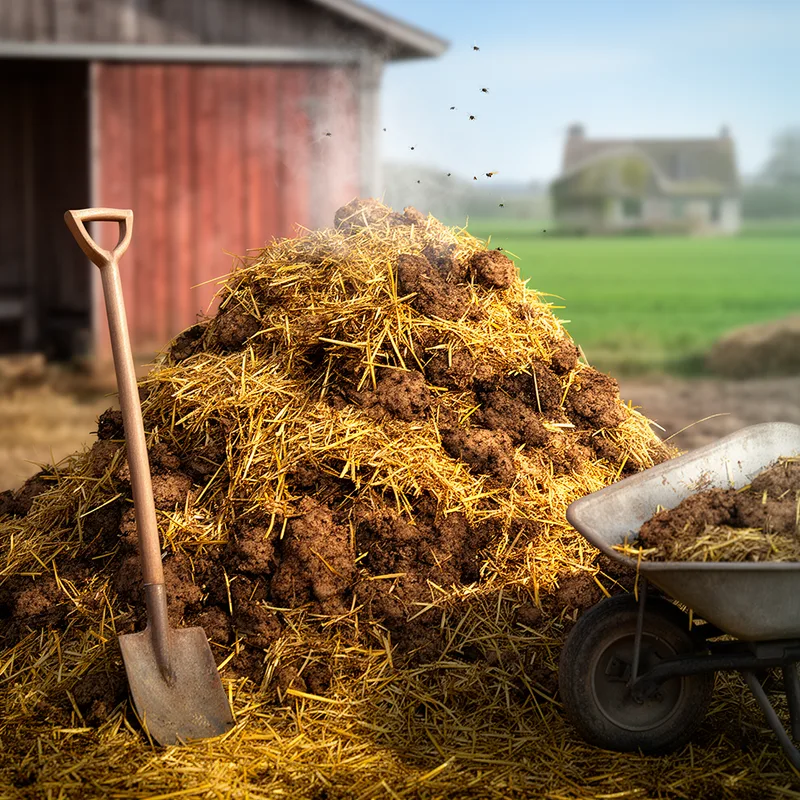
- The farmer shoveled fresh straw onto the muckheap behind the barn.
Examples
-
They moved the muckheap to the far side of the field to keep the smell away from the house.
-
Flies buzzed around the old muckheap that had grown over the summer.
-
The muckheap was located behind the barn.
-
Farmers often spread the muckheap on their fields.
-
The farmer shoveled fresh straw onto the muckheap behind the barn.
-
Flies buzzed around the old muckheap that had grown over the summer.
-
They moved the muckheap to the far side of the field to keep the smell away from the house.
Synonyms

 1
9.9
1
9.9

A pile of old rubbish and animal bones left by people


 1
8.2
1
8.2
A pile of animal waste and straw on a farm

A pile of animal dung and farm waste behind a barn

A pile of dust and old rubbish thrown away
How Large

Surface Forms
Morphology
Etymology
Muckheap comes from the simple words muck ('dung' or 'dirt') and heap ('pile'). So it literally means a pile of farm waste, which is why the word describes the smelly pile you might find behind a barn.