
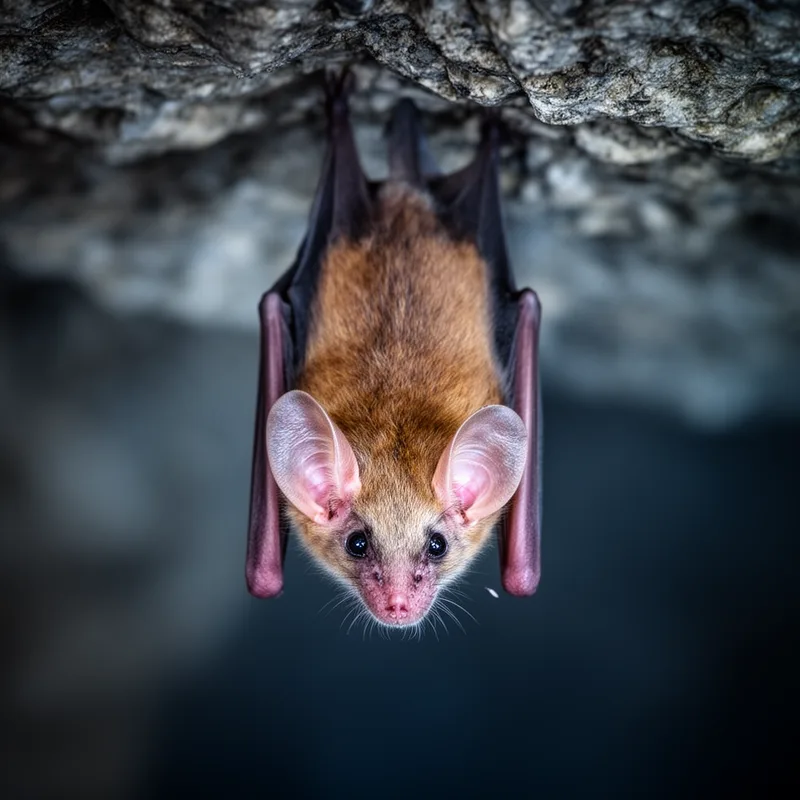
mouse-eared bat
- noun
- /ˈmaʊsˌɪrd bæt/
- A young mouse-eared bat was found roosting in the attic.
Examples
-
The mouse-eared bat is often found in forests.
-
Researchers tagged several mouse-eared bats to study their nightly hunting patterns.
-
The mouse-eared bat is common in caves throughout Europe and Asia.
-
I spotted a mouse-eared bat near the lake.
-
The mouse-eared bat is often seen hanging from tree branches during the summer nights.
-
Scientists have studied the mouse-eared bat to understand its unique hunting strategies.
-
In the cave, we spotted a mouse-eared bat roosting quietly among the rocks.
Synonyms

 201
1.0
201
1.0

A small animal that flies at night and finds food by sound


 1
9.9
1
9.9
A group of bats with mouse-like ears that live worldwide

A large group of mouse-eared bats found across the world
Surface Forms
Morphology
The meaning 'a bat with ears like a mouse' is directly and compositionally derived from combining the adjective 'mouse-eared' (having ears shaped like a mouse) with 'bat' (the mammal). This clear adjective + noun descriptive pattern is common across languages and follows standard English compounding, so an average B1 learner who knows the parts will understand it.
Etymology
The compound noun mouse-eared bat comes from the bat's look: people thought its mouse-like ears were like a mouse's, so the name means 'a bat with ears like a mouse'.