

monotype
 1
9.4
1
9.4

- noun
- /ˈmɒnəˌtaɪp/
- Specialized
- For years, Wyoming-based artist Neltje (pronounced nell-chi) used the monotype method of painting, in which the paint is applied to a flat surface, then a canvas or other medium is pressed into it.
- watercolor monotype
- monotype with pastel
- print of the monotype
Examples
-
That feeling of a nearby void becomes manifest in Schall's striking "The Accident," a monotype print that depicts some kind of factory in the background.
Blog text (29) -
For most of his career, Diabate worked in a variety of media, including oils, acrylics, and monotypes.
Academic text (1997) -
For the last couple of years, however, primarily because the press she used on her monotypes no longer works, she has been creating abstract paintings using acrylics on large canvas pieces.
Blog text (8) -
In 1971, at the age of ninety, Picasso did a series of etchings related to the monotypes, conceived as both a characteristic competitive reworking and an homage to Degas.
Academic text (1993) -
The artist created a stunning monotype by pressing the painted plate onto the canvas.
-
In her workshop, she demonstrated how to produce a monotype using an inked glass plate.
-
Each monotype she made was unique, capturing different textures and colors from the plate.
Compounds

- Archaic
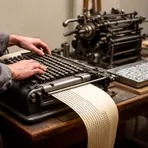
A keyboard that punches paper tape to tell a Monotype machine which letters to make
How Unique

Surface Forms
Morphology
Etymology
Monotype comes from mono- meaning 'one' and type meaning 'impression' or 'print'. Think of it as a single 'imprint' made once, so each monotype print is one-of-a-kind.