
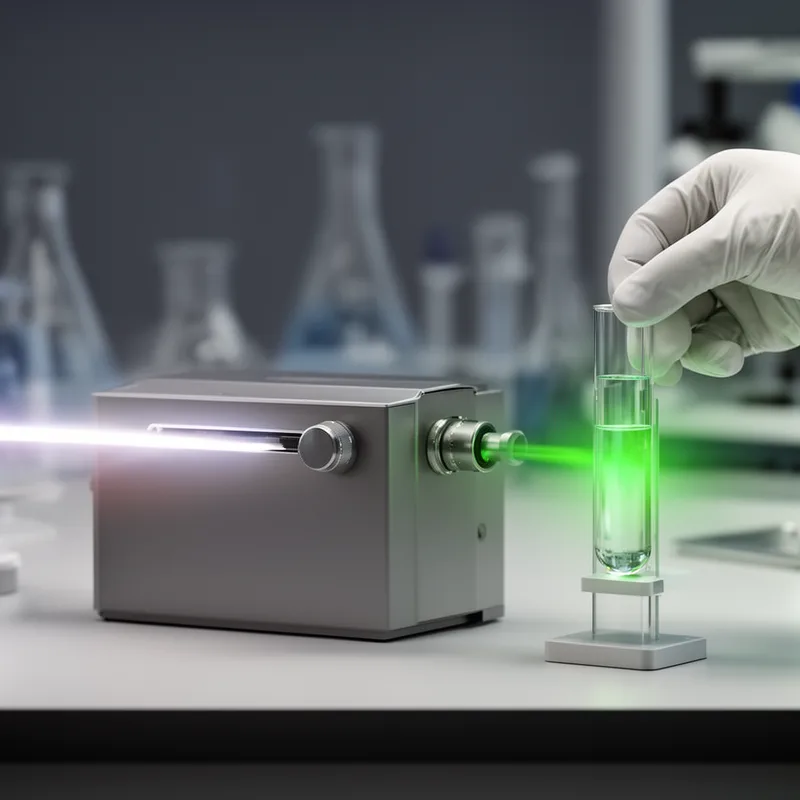
monochromator


 1
9.9
- noun
- /ˌmɒnəˈkroʊˌmeɪtər/
- Specialized
- In reactor sources, the neutron wavelength is selected using a monochromator, which filters out all but a narrow range of wavelengths.
Examples
-
Monochromatic X-rays were generated using a double-crystal monochromator with Si(111) crystals.
Academic text (2018) -
Between the reactor and the spectrometer, he placed a sodium chloride crystal, and using Bragg reflection from this monochromator, he was able to select neutrons with a single energy from the continuous spectrum of neutrons in the beam.
Academic text (1994) -
The product family can operate in various scanning modes, including monochromator, chemometric, and digital transform.
Academic text (2006) -
(The three axes that give this spectrometer its name are those about which the sample and the initial and final monochromators rotate.)
Academic text (1994) -
The instrument uses a high-performance double monochromator to achieve ultralow stray light (0.00005% or less at 340 nm) while maintaining up to a 0.1-nm resolution.
Academic text (2006) -
The scientist used a monochromator to isolate a specific wavelength of light for the experiment.
-
In the laboratory, a monochromator helped separate light into its individual wavelengths for analysis.
-
The researchers installed a monochromator to accurately filter out unwanted wavelengths during the spectroscopy tests.
Surface Forms
Morphology
monochromator = monochrome (semi-transparent) = monochrome + ator
Formally built from 'monochrome' + the agentive suffix '-ator', but the term is technical and uses combining forms, so the relation may not be fully obvious to general learners.
Etymology
Monochromator comes from mono- meaning 'one' and chrom- meaning 'color', the same parts in monochrome, which means 'one color'. So a monochromator is a device that picks out a single color of light from a mix of colors.