
monadnock


 1
9.9
1
9.9
- noun
- /məˈnæd.nɑk/
- Specialized
- The region around Mount Monadnock was still glaciated as late as 12,000 years ago.
- Mount Monadnock
Examples
-
The Society for the Protection of New Hampshire Forests, the state's oldest nonprofit conservation organization, began acquiring property on Mount Monadnock early last century.
Academic text (2011) -
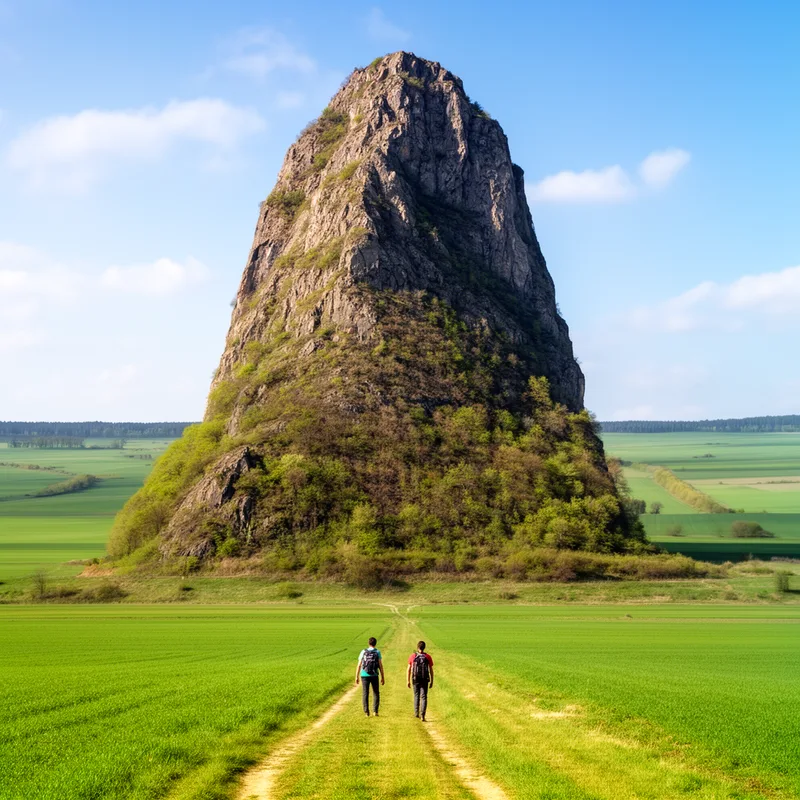
Mount Monadnock is an isolated hill that rises dramatically from the flat landscape around it.
-
Mount Monadnock has long been a popular attraction.
Academic text (2011) -
Mount Monadnock is also designated a National Natural Landmark.
Academic text (2011) -
The western view has Mt. Monadnock in the distance.
Blog text (1) -
The term, used primarily by American geologists, is based on a particular mountain that fits that description: Mount Monadnock, in southern New Hampshire.
Academic text (2011) -
The arctic-alpine species on Mount Monadnock grow in open, rocky, or sandy areas; they do not occur under a forest canopy.
Academic text (2011) -
Although Monadnock is only 3,165 feet high, the forest dwindles out some 300 feet from its top, and the summit is bare of trees.
Academic text (2011) -
Mountain sandwort is one of several arctic-alpine species that grow on New Hampshire's Mount Monadnock (top photograph).
Academic text (2011) -
It holds more than 3,500 acres and leases much of that land to be operated as part of the 5,000-acre Monadnock State Park.
Academic text (2011)
Synonyms
 ∞
1.0
∞
1.0
A raised area of land that is not as high as a mountain
How Prominent

Surface Forms
Etymology
Monadnock comes from an Abenaki place name, originally written monadnôk, which means 'mountain standing alone'. That's why today a monadnock is an isolated hill or mountain that rises sharply above the flat land around it.