
molluscan


 1
7.9
1
7.9
- noun
- /mɒˈlʌskən/
- Specialized
- Known to scientists as Zonitoides arboreus, the molluscan marauders are hard to detect and even harder to kill with commercial chemicals, according to Agricultural Research Service biologist Robert G. Hollingsworth.
- molluscan shellfish
Examples
-
Oysters, clams, and mussels are examples of molluscan animals that are often harvested for food.
-
Oysters, clams, and mussels are considered aquaculture species because of the amount of management that goes into maintaining productive molluscan shellfish beds.
Academic text (2005) -
At present, two models have been proposed for molluscan shell formation, but neither of them is accurate enough.
Blog text (31) -
Extrapolating from our work to other taxa is unwieldy because there is no part of a molluscan brain homologous to any part of a vertebrate brain.
Academic text (2009) -
Many researchers study the growth patterns of molluscan species to understand marine biodiversity.
-
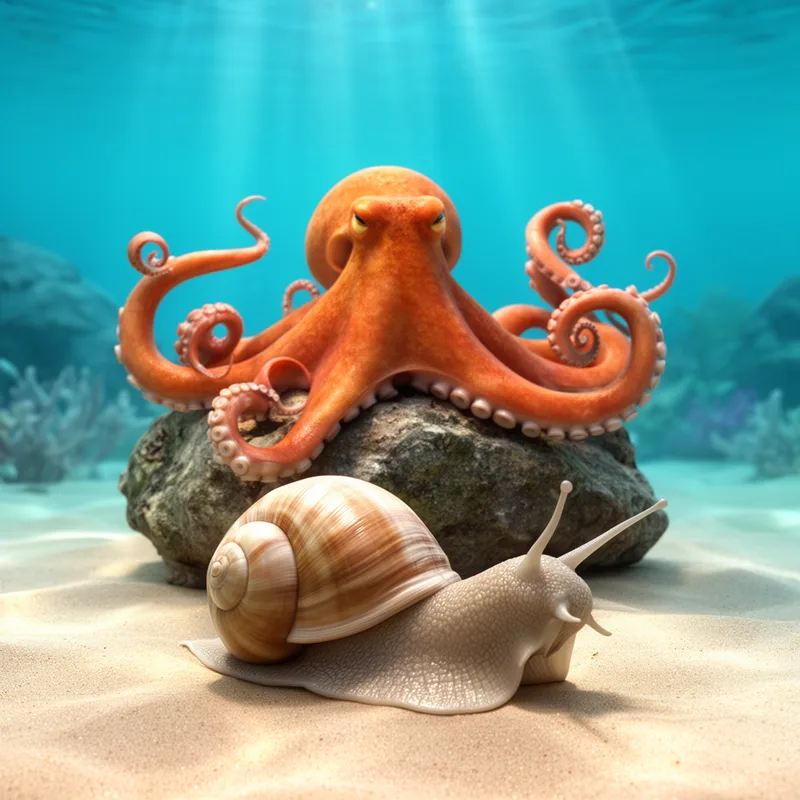
The aquarium displayed a variety of molluscan creatures, including snails and octopuses.
Synonyms
 11
5.6
11
5.6
A soft-bodied animal like a snail or clam that often has a shell
Surface Forms
Etymology
A molluscan as a name comes from Latin mollis 'soft' and the word mollusc. A helpful way to remember it is to think of the English verb mollify ('soften')—a molluscan is a 'soft' animal such as a snail or an octopus.