
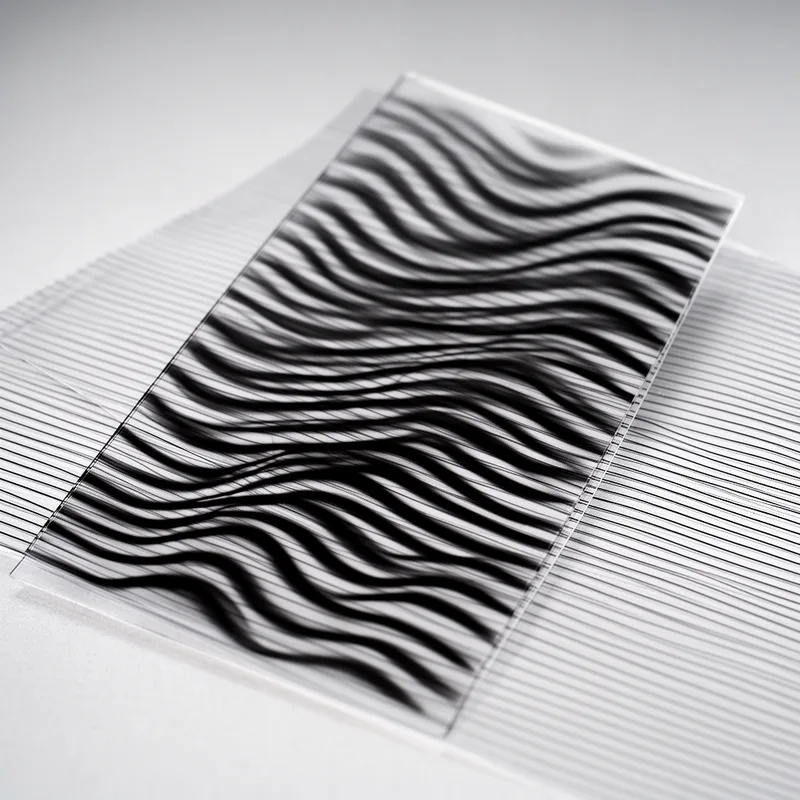
moiré
 1
8.5
1
8.5

- noun
- /mɔɪˈreɪ/
- So you have to put more work into it in software to fix the moiré if those were taken as raw images.
- a moire pattern
Examples
-
Yeah, that's true; getting moiré is the most annoying problem you get.
Blog text (32) -
Using software to fix it is a challenge because some pictures have less moiré, while some pictures have too much moiré.
Blog text (32) -
Another downside is occasional moiré patterns!
Academic text (2008) -
Fortunately, moiré hasn't been an issue for me in real-life shooting.
Blog text (32) -
I've seen plenty of real-world samples already that show moiré, even in things like facial hair.
Blog text (32) -
Considering moiré, the Pentax 645D is AA free and there are no complaints about moiré.
Blog text (32) -
I do agree with your sentiment; there are many times when moiré can be a factor, particularly with hair and fabrics, but for me these are unlikely to be an issue.
Blog text (32) -
Overall, I think the K5IIs is sharper, but the Fuji handles moiré better because of its different CMOS design.
Blog text (32) -
The K-30, which has the same sensor as the K-01, shows moiré too, but not quite as much as the K-5 IIs.
Blog text (32) -
The artist created a stunning moiré effect by overlapping two transparent sheets with grid patterns.
Synonyms
A wavy pattern that appears on scanned or digital images when repeating patterns overlap

A pattern made when waves meet that shows details about a thing
Surface Forms
Etymology
Moiré for a pattern comes from the French moire, which means 'watered' or 'marbled' and is linked to marble. That is why moiré describes the rippled, wave-like lines you see when two sets of lines or grids meet.