

modulus
- noun
- /ˈmɒdʒʊləs/
- Specialized
- In electrical engineering, the impedance modulus represents the absolute value of the complex impedance encountered in a circuit.
Examples
-
This is the argument and this is the modulus of this complex number, OK.
-
If we apply Theorem 1 to the previous result, we get another fractal-equivalent RRVGD0L system, where all the vectors have the same modulus.
Academic text (1997) -
And so when you take the square modulus, the energy factors cancel out.
-
And this one over here is going to be the modulus of beta squared.
-
Well it's just the square modulus of PSI I.
-
You want this the modulus of Z Therefore cancelling this.
-
The modulus of a complex number is calculated by taking the square root of the sum of the squares of its real and imaginary parts.
-
To find the distance from the origin, we need to calculate the modulus of the complex number in the Argand plane.
Synonyms
 2
3.9
2
3.9

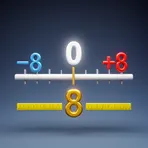
How far a number is from zero and always zero or positive
Compounds

- Specialized
A measure of how hard a material is to compress, using the pressure change divided by the change in volume

- Specialized
A number that shows how stiff a material is when you push or pull it

- Specialized
A measure of how well a material resists change in shape when layers slide past each other

- Specialized
A number that shows how stiff a material is when force makes it stretch

Surface Forms
Etymology
Modulus comes from the Latin root modus meaning 'measure' and the ending -ulus meaning 'small', so it originally meant a 'small measure'. That's why the modulus of a complex number tells you its 'size' or absolute value.