
modalism


 1
9.9
- noun
- /ˈmoʊdəlɪzəm/
- Specialized
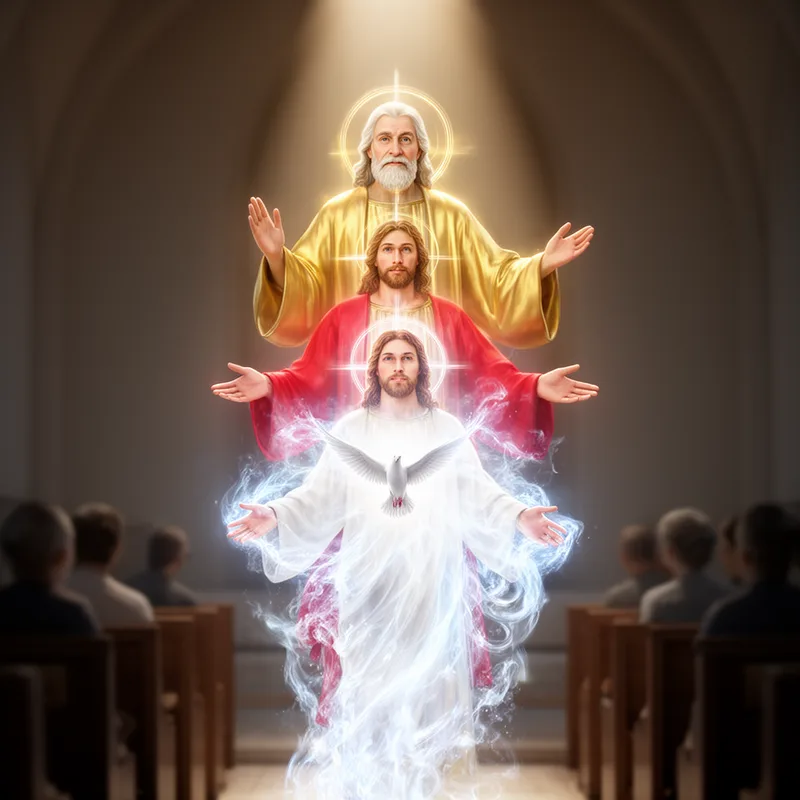
- The debate over modalism centers on whether the Father, Son, and Holy Spirit are simply different modes of one God.
- avoid modalism
- modalism is also
Examples
-
Theophanies were also invoked against modalism, the argument being that since Christ has appeared in Old Testament theophanies, whereas the Father has not, he must be distinct from the Father.
Academic text (2007) -
Throughout the rest of the letter, Basil takes great pains to avoid modalism.
Academic text (2007) -
And that is why heresies such as modalism matter.
Blog text (22) -
Here, his modalism returns to haunt him.
Academic text (1990) -
This concern to guard against modalism is also present in Basil's writings.
Academic text (2007) -
What we have, then, are two ways of refuting modalism, one that uses ousia and one that does not.
Academic text (2007) -
One of the things Hilary has learned from Basil is the importance of avoiding modalism.
Academic text (2007) -
Above all, Hilary wants to refute the Homoians in such a way that he also refutes modalism.
Academic text (2007) -
When we keep in mind, however, that the creed was not intended to address the current controversy, Hilary believes he can still recommend it as an effective counter to modalism.
Academic text (2007) -
Here we have a specific avowal of modalism which cannot distinguish the Father and the Son in eternity and so concludes that, as Christ suffered in time, so the heavenly Father does and must do this in eternity.
Academic text (1990)
Synonyms
 1
9.9
A Christian belief that God is one person who appears as Father, Son, or Holy Spirit
Surface Forms
Morphology
Etymology
Modalism comes from mode, which comes from the Latin modus meaning 'manner' or 'way', and the ending -ism meaning 'belief'. So modalism is the belief that the Father, Son and Holy Spirit are different 'modes' or faces of one God, not three separate persons.