
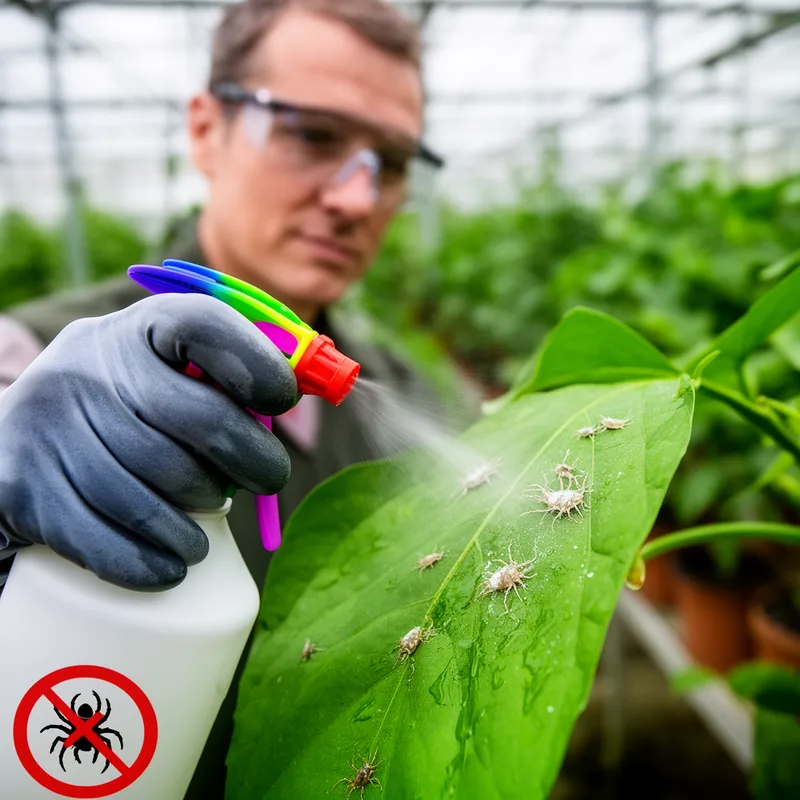
miticide
- noun
- /ˈmɪtɪˌsaɪd/
- Specialized
- "If this resistance proves constant," says Rinderer, "beekeepers may in some cases be able to reduce, if not eliminate, miticide treatments by relying on the Russian bees."
- chemical miticides
- use of a miticide
Examples
-
Farmers often rely on a miticide to protect their crops from damaging mite populations.
-
And the voromite was controlled by a miticide that was used to control ticks on cattle called amitriz.
-
But miticides are not long-term solutions, and mite populations are becoming resistant to them.
Academic text (2004) -
Tests showed that mite-infested ferns had one-fourth the growth of plants sprayed with a miticide.
Academic text (2002) -
The scientists populated the apiaries with survivors from hives that had not been treated with mite-controlling chemicals or miticides.
Academic text (1999) -
The standard treatments for Varroa mites are chemical-based miticides, such as fluvalinate and coumaphos.
Academic text (2004) -
To control the infestation, the gardener applied a miticide specifically designed for fruit trees.
-
The research indicated that the new miticide was very effective in eliminating spider mites on tomatoes.
Synonyms
 7
8.5
7
8.5

A yellow chemical that kills insects on plants and in homes

A chemical used to kill mites and ticks

A chemical used on animals to kill parasites like ticks and mites
How Effective

Surface Forms
Morphology
Etymology
The word miticide joins mite and -cide, where -cide means 'to kill' and appears in familiar words like pesticide and suicide. So a miticide is a chemical used to kill mites.