
miscegenation law


 1
9.9
1
9.9
- noun
- /ˌmɪsɪdʒəˈneɪʃən lɔ/
- Archaic
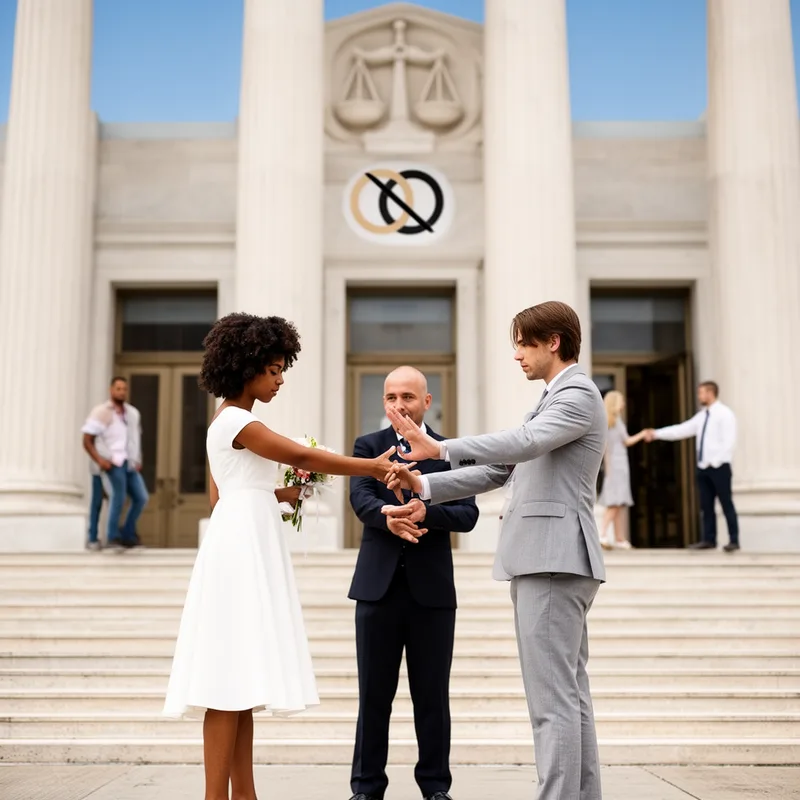
- Miscegenation laws were designed to prevent interracial marriages in the United States until they were declared unconstitutional.
Examples
-
Clearly, Jews and Italians were, from the very beginning, recognized as whites in terms of legal and political rights; they were allowed to naturalize, they were allowed to vote in states that restricted the suffrage to whites, and miscegenation laws were never enforced to prevent their marriages to other Europeans.
Academic text (2002) -
But as with racial desegregation, viewed from forty years away, everyone marched with MLK and everyone knows miscegenation laws are wrong.
Blog text (2) -
Also note that most miscegenation laws created in this country were to prevent white men from having sex with black women, not the other way around, as most people seem to believe.
Blog text (3) -
When word spread of possible "anti-miscegenation" laws, a broad coalition formed to defeat the bill and demonstrate disapproval from communities all over the state.
Blog text (15) -
To be fair, "anti-miscegenation" laws are a bit of an anomaly, occurring as they do in the American world and consequently having had very little pedigree.
Blog text (18) -
At that time, there were 16 states that had these miscegenation laws (Davidson, 1992; Foeman & Nance, 1999).
Academic text (2005) -
The Supreme Court's decision to overturn miscegenation laws was a significant victory for civil rights in America.
-
Historically, miscegenation laws enforced social barriers that prohibited marriage between individuals of different races.
Antonyms


Support for romantic relationships or marriages between people of different races
Surface Forms
Morphology
The meaning 'a law concerning miscegenation' is directly and transparently derivable from combining 'miscegenation' (racial interbreeding) with 'law' (a statute). The noun+noun compositional pattern is straightforward and cross-linguistically common, although the additional historical nuance that such laws typically prohibited interracial relationships may require cultural knowledge but does not block basic compositional inference.
Etymology
Miscegenation law comes from a word about mixing and races, and it was used for rules that stopped people of different races from marrying or having relationships. That's why it means a law that forbids 'interracial marriage'.