
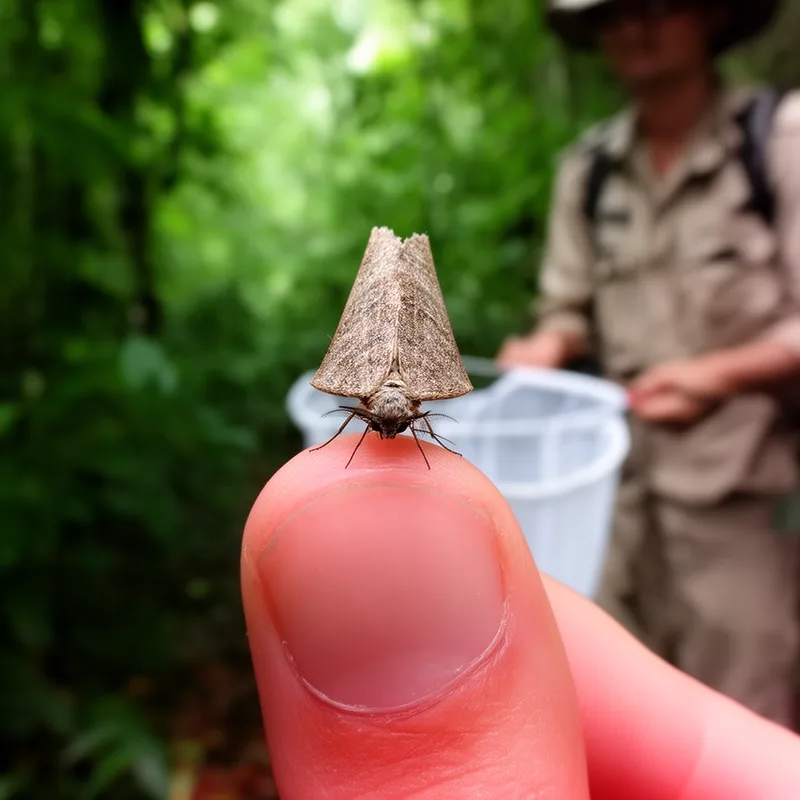
microlepidopteran
- noun
- /ˌmaɪkroʊˌlɛpɪˈdɒptərən/
- Specialized
- The entomologist discovered a new species of microlepidopteran in the rainforest.
Examples
-
Researchers use special nets to collect microlepidopterans for scientific study.
-
Many microlepidopterans are so small they can be mistaken for tiny flies.
-
The microlepidopteran flitted around the garden.
-
Did you see that microlepidopteran near the flowers?
-
The entomologist discovered a new species of microlepidopteran in the rainforest.
-
Many microlepidopterans are so small they can be mistaken for tiny flies.
-
Researchers use special nets to collect microlepidopterans for scientific study.
Synonyms
A small dull-coloured moth that has jaws for chewing food

A small dull brown moth that eats cloth and wool

A small moth whose caterpillars eat and damage crops like potatoes
How Small


Surface Forms
Morphology
microlepidopteran = microlepidopteran (semi-transparent) = micro + lepidopter + an
The noun is a substantivized use of the adjective, so its transparency follows the adjectival form.
Etymology
Microlepidopteran comes from micro- ('small') plus lepido- ('scale') and -ptera ('wing'), the roots behind the words for butterflies and moths. So a microlepidopteran is literally a 'small scale-wing' and means a very small moth.