
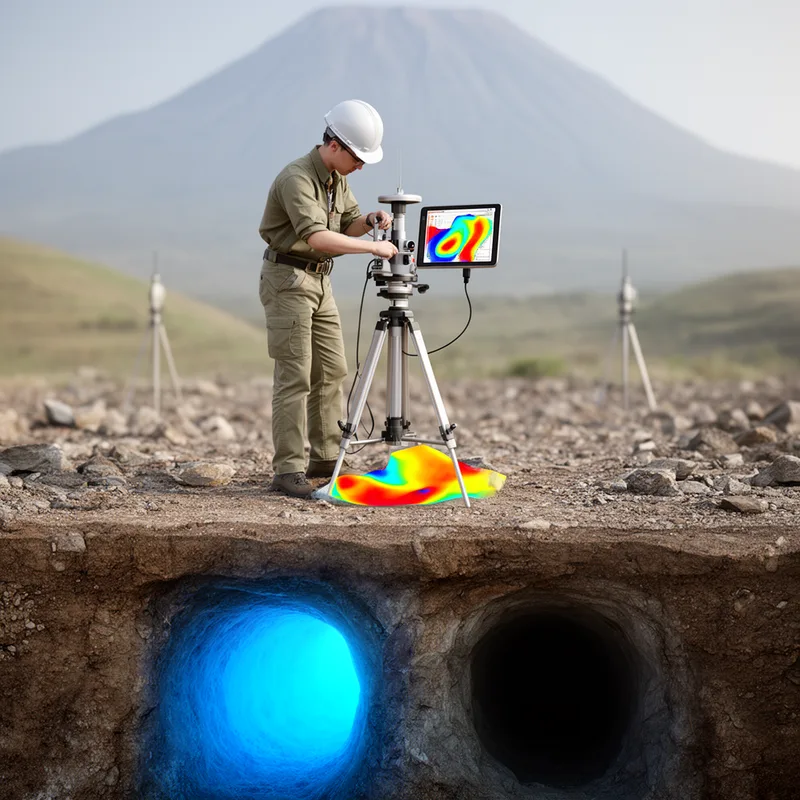
microgravimetric
- adjective
- /ˌmaɪkroʊˌɡrævɪˈmɛtrɪk/
- Specialized
- The scientists conducted a microgravimetric analysis to detect subtle changes in the Earth's gravitational field.
- microgravimetric survey
Examples
-
The presence of small, open chambers behind each notch would explain why the 1980s microgravimetric survey indicated that the pyramid's four edges were of a lower density than the rest of it.
Academic text (2009) -
We gave what we felt was strong evidence for the theory, which explains a French team's microgravimetric survey in the 1980s that recorded variations in the density of the pyramid.
Academic text (2009) -
For now, those who remain skeptical about the theory will need to devise a better explanation for the room's existence, as well as the results of the 1980s microgravimetric survey.
Academic text (2009) -
By using advanced microgravimetric techniques, the researchers were able to obtain precise measurements of geological structures.
-
The microgravimetric data revealed minute fluctuations, which helped in understanding the region's tectonic activity.
How Sensitive
- Specialized

- Specialized
 13
8.9
 195
2.7
- Specialized
4
4.5
Surface Forms
Morphology
microgravimetric = gravimetric (semi-transparent) = micro + gravi + metric
The prefix micro- is transparent, but the gravimetric base is a specialized term, so the meaning is not fully predictable without prior knowledge.
Etymology
Microgravimetric comes from the parts micro- 'small', grav- 'gravity' and -metric 'measuring'. So it means 'measuring very small changes in gravity', which is why scientists use it to find hidden underground features by sensing tiny gravity differences.