
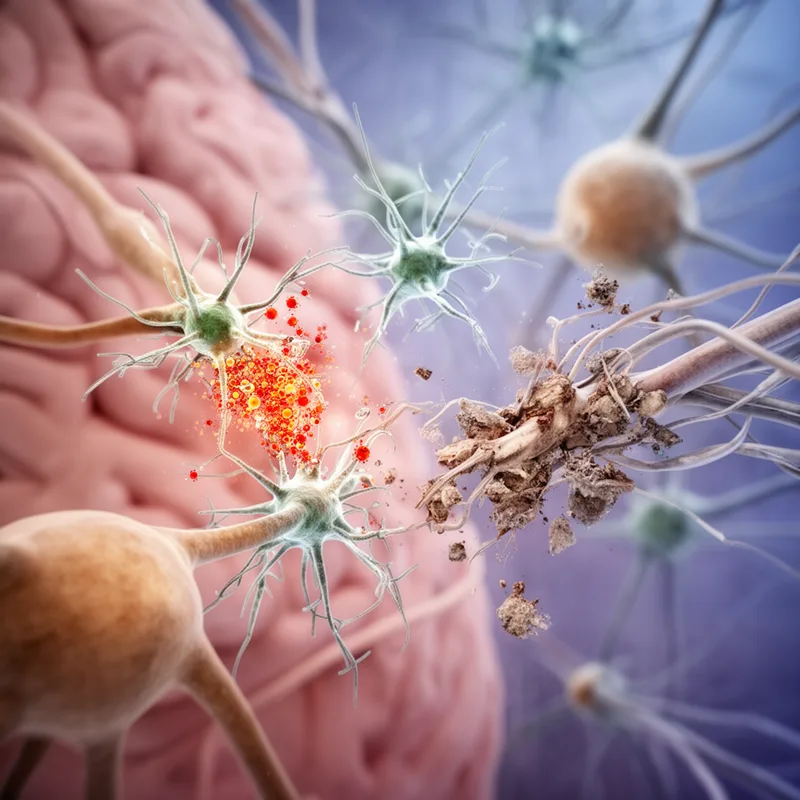
microglia
 1
9.9

- noun
- /ˌmaɪkroʊˈɡliːə/
- Specialized
- IL-1beta is an acute-phase cytokine, generally produced in response to cell damage, and inside the brain, it is mostly released by microglia.
- microglia activation
- cells called microglia
- the brain's microglia
Loading YouTube…
Watch on YouTubeAnd there's a type of microglia that is involved in synaptic pruning.
- And there's a type of microglia that is involved in synaptic pruning.
- The third stages is when we have the microglia, which are the cells that are responsible for cleaning the brain gets activated.
Examples
-
OK, so so microglia are actually the immune cells of the brain.
-
Moreover, we noted that reactive astrocytes produced an extensive proliferation of fibrous processes and that the microglia assumed a phagocytic role.
Academic text (2002) -
And they will also activate or calm the microglia that is the immune cells in my brain.
-
The third stages is when we have the microglia, which are the cells that are responsible for cleaning the brain gets activated.
-
And there's a type of microglia that is involved in synaptic pruning.
-
Astrocytes are commonly known to be activated by microglia, but they are also able to respond directly to infections initiated by parasites, viruses, and bacteria.
Academic text (2018) -
Neuroinflammation has been recognized to play an important role in AD and involves chronic activation of microglia and astrocytes in brain regions affected by AD pathology 1-3.
Academic text (2018) -
It appears that microglia, the principal immune cells of the central nervous system, have enhanced P2X7R expression following inflammatory insults (see above) 3, 75.
Blog text (33) -
In a mature, healthy brain, microglia stand watch, ready to respond to injury.
-
By keeping the environment around the neurons and synapses clean, microglia help maintain proper brain function.
Synonyms
A small cell in the brain and spinal cord that eats and removes dead cells and waste
How Large
- Specialized

- Specialized
1
9.9
Surface Forms
Morphology
Etymology
The word microglia comes from micro- 'small' and glia 'glue', because these cells were first thought to be tiny 'glue' that held the brain together. Today microglia are the brain's small defenders and cleaners. They fight infection and remove damaged cells.