

mico
- noun
- /ˈmiːkoʊ/
- Jones assumes that Tomochichi came from nobility because of his familial connections with other Lower Creeks as well as his demeanor in his portraits, asserting that "the countenance of this aged mico, as it has come down to us."
Examples
-
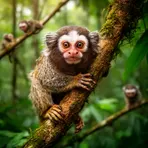
The zoo recently added a new exhibit featuring a rare mico that is known for its playful behavior.
-
During their trip to the rainforest, the children were thrilled to see a lively mico swinging from tree to tree.
-
When visiting the jungle, we often spotted a mico foraging for fruit among the branches.
Synonyms
 5
7.8
5
7.8

A very small monkey from Central and South America with soft fur and claws instead of nails


 1
8.0
1
8.0
A very small monkey from the Amazon rainforest that can fit in your hand

A small South American monkey with soft fur that often has twins and is not a tamarin

A small South American monkey with claw-like nails and quick movements

A small South American monkey with soft fur, a golden mane, and a long tail

A very small monkey from the Amazon rainforest that people call the pygmy marmoset
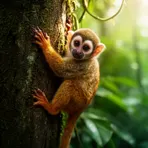
A type of very small South American monkey that lives in trees
Surface Forms
Etymology
Mico comes from Spanish and Portuguese where it means 'small monkey', especially in Central and South America. It most likely comes from an indigenous American word, so think of a quick, tiny monkey in the trees to remember the meaning.