
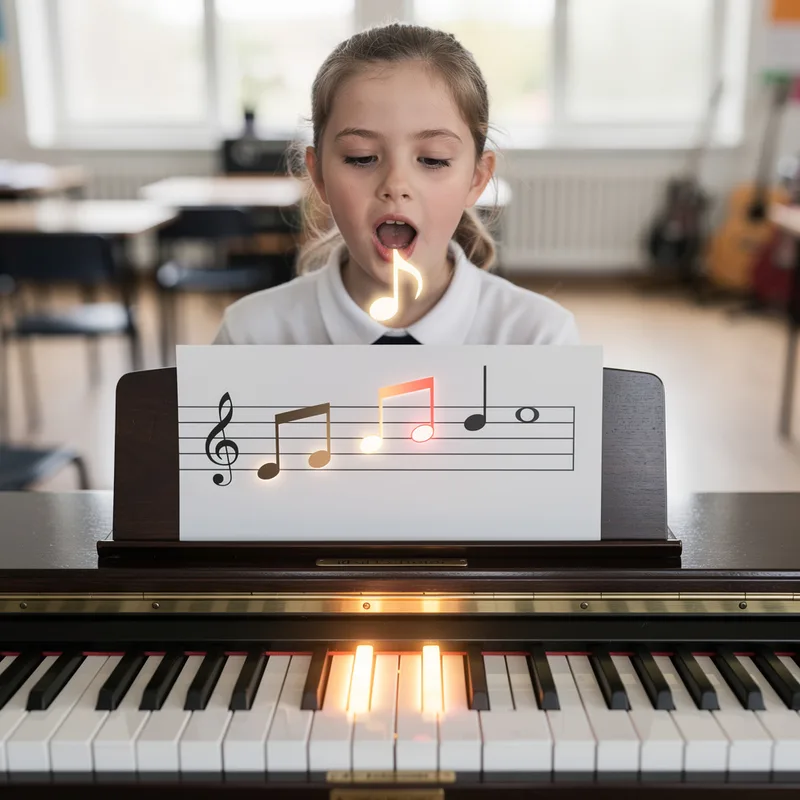
mi
 4
9.9
4
9.9

- noun
- /mi/
- Specialized
- Students will probably be familiar with sol mi, sol mi la, and other pentatonic patterns.
- sol, mi
- re, mi
- mi, la
Loading YouTube…
Watch on YouTubeIn movable doe we use T so doe re MI FA Sol la T doe.
- In movable doe we use T so doe re MI FA Sol la T doe.
Examples
-
Students who can perform do re mi will have to learn fa sol la to perform "Brother John."
Academic text (1992) -
We want the do-re-mi you owe us, lady.
-
One, two, three, four... one, two, MI!
-
♪ Mi, mi, mi, mi!
-
For example, hold the note do while the students sing do-mi-so from your Curwen hand signs.
Academic text (1997) -
For example, give lower elementary students three-note phrases containing only sol, mi, and la.
Academic text (2012) -
If the song ends with the notes mi-re-do, a harmony part could be mi-re-mi or mi-fa-mi.
Academic text (1997) -
Teachers begin pitch-matching activities using bitonic (mi-so) or tritonic (mi-so-la) melodies and have students sing individually.
Academic text (1994) -
In music class, the teacher asked the students to sing the notes do, re, mi, and fa in that order.
-
When learning solfège, students often start with the syllables do, re, and mi to understand melody.
Compounds



Surface Forms
Etymology
The word mi in music comes from a teaching method from the middle ages where singers took syllables from a Latin hymn and the third line began with 'mi', so that sound became the name of the third note. So in solfège mi is the name for the third scale note.