
methyl orange
- noun
- /ˈmɛθəl ˈɔrɪndʒ/
- Specialized
- We added methyl orange to the mixture to observe when the titration reached its endpoint.
Examples
-
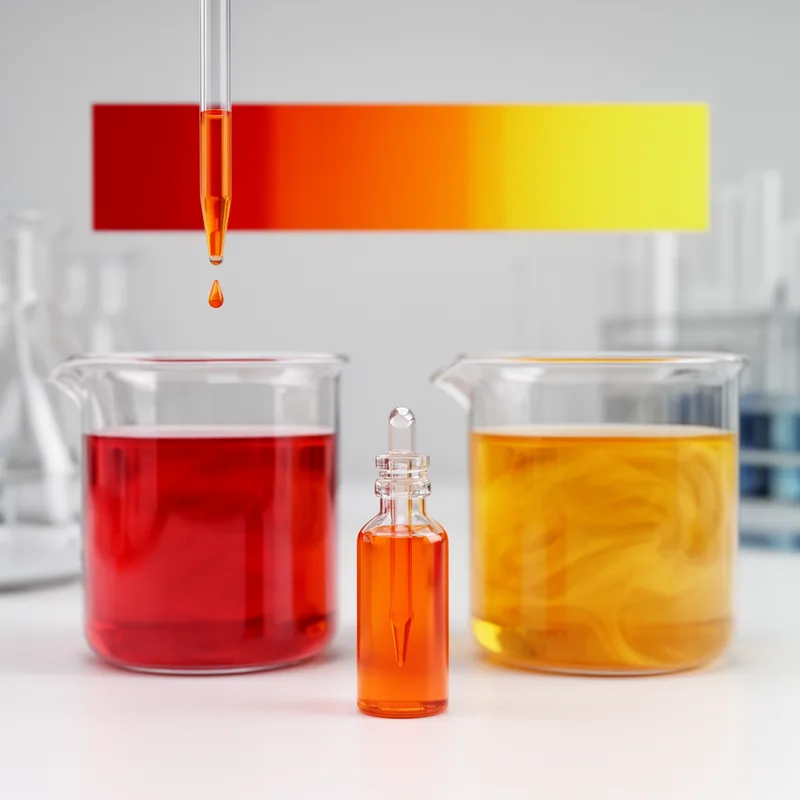
The color of methyl orange changes from orange to red as the solution becomes more acidic.
-
Methyl orange is commonly used in laboratories to determine the pH of a solution.
-
The solution turned yellow with methyl orange.
-
You can use methyl orange to test pH levels.
-
Methyl orange is an effective acid-base indicator used in titrations to determine pH changes.
-
During the experiment, we noticed that methyl orange shifts from yellow to red in acidic conditions.
-
To find the endpoint of the titration, we added methyl orange and observed the color change.
Surface Forms
Morphology
The constituents 'methyl' (a chemical group) and 'orange' (a color) make it reasonable for a learner to infer this refers to an orange-colored chemical substance, so the colour and chemical nature are transparent. However, the specific technical sense — an azo dye used as an acid–base indicator in titrations — is specialized and not predictable from the parts alone, making the full meaning only partially recoverable.
Etymology
Methyl orange comes from the small chemical part methyl and the dye's bright color orange. That's why the name fits this orange dye used to show whether a liquid is an 'acid' or a 'base'.

