
metaplasia
- noun
- /ˌmɛtəˈpleɪziə/
- Specialized
- Successful skin graft take and pseudomucinous metaplasia of the grafts were achieved in all patients.
- osseous metaplasia
- cartilaginous metaplasia
- oncocytic metaplasia
Examples
-
Finally, Spechler showed that carcinoma can arise in foci of metaplasia, which is usually a consequence of chronic inflammation.
Academic text (2006) -
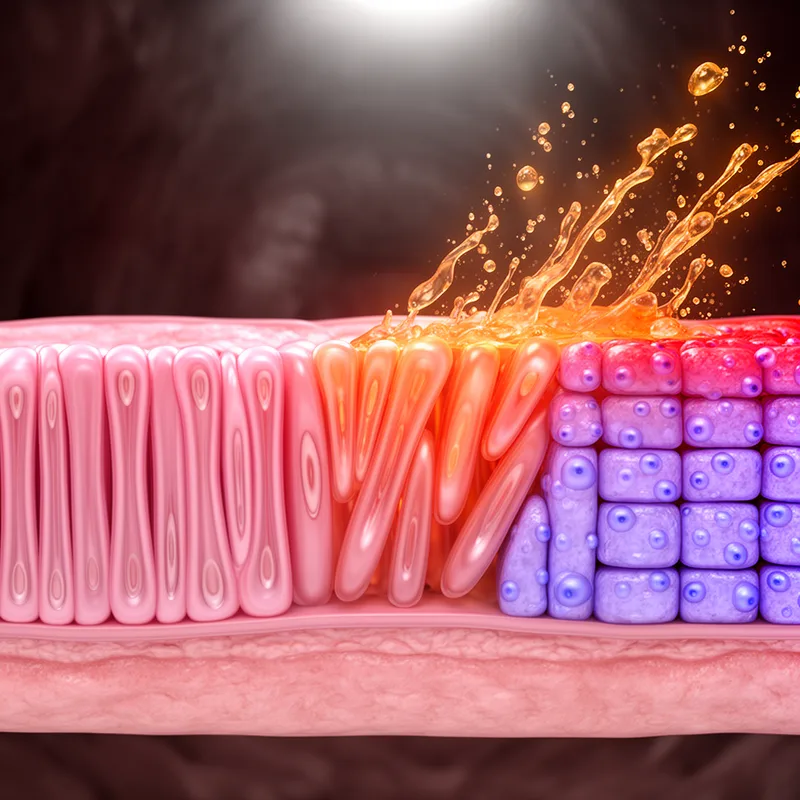
Metaplasia is the conversion of one fully differentiated cell type to another fully differentiated cell type.
Academic text (2009) -
Oncocytic metaplasia of the laryngeal mucosa is rare.
Academic text (2009) -
We are reporting an unusual case of cartilaginous metaplasia in the aortic valve of an elderly patient.
Academic text (2007) -
Patients identified as category D have severe mucosal atrophy associated with intestinal metaplasia.
Academic text (2016) -
Therefore, successful metaplasia in the graft mucosa also plays an important role in the sensitivity and elasticity of the newly created vagina.
Academic text (2012) -
There have also been reports of osseous metaplasia occurring in the cardiac valves and gastrointestinal tract.
Academic text (2009) -
Cartilaginous metaplasia in the mammalian aortic valve is an uncommon pathologic finding.
Academic text (2007) -
We believe that this is the first reported case of osseous metaplasia within the maxillary sinus that was triggered by endoscopic sinus surgery.
Academic text (2009) -
The process of metaplasia involves the transformation of one type of mature cell into another due to stress or injury.
How Advanced
- Specialized
 5
8.0
5
8.0


- Specialized
- Specialized
1
7.4
- Specialized
1
9.4
- Specialized
2
5.8
- Specialized
Surface Forms
Morphology
metaplasia = meta + plas + ia
The medical sense uses the same classical elements, but the meaning is highly specialized and not recoverable from ordinary English word knowledge.
Etymology
Metaplasia comes from the Greek parts meta- 'change' and -plasia 'formation'. So in medicine metaplasia describes cells that 'change form' into another type, often after injury or long irritation, and that is why doctors check for it.