
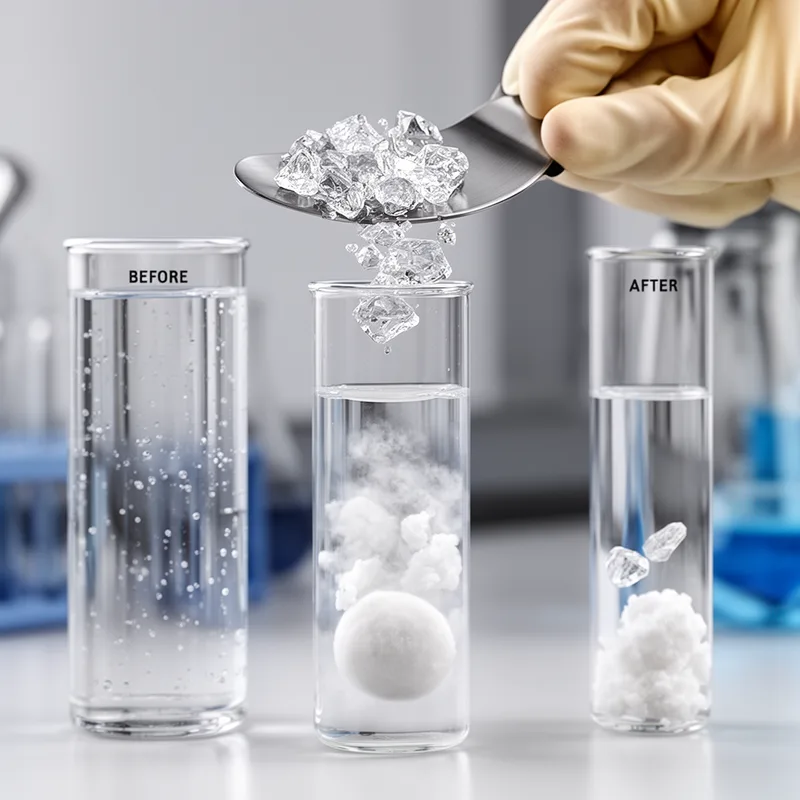
metaphosphoric acid
- noun
- /ˌmɛtəˈfɔsfərɪk ˈæsɪd/
- Specialized
- For some laboratory procedures, metaphosphoric acid is added as a strong dehydrating agent.
Examples
-
The precipitation of proteins can be achieved by using metaphosphoric acid in the sample preparation.
-
Unlike orthophosphoric acid, metaphosphoric acid is commonly found in a glassy solid state.
-
The laboratory uses metaphosphoric acid for various experiments.
-
Have you ever worked with metaphosphoric acid in your research?
-
In biochemical analysis, metaphosphoric acid serves as an effective dehydrating agent to preserve samples.
-
Researchers often employ metaphosphoric acid during the extraction of nucleic acids from biological tissues.
-
When preparing the specimen, metaphosphoric acid is typically utilized due to its glassy solid properties.
Synonyms

A strong liquid acid made of linked smaller acids that come from phosphorus, used to remove water in chemistry
Surface Forms
Morphology
metaphosphoric + acid
The modifier 'metaphosphoric' is a technical, low-frequency chemical term (not listed in the supplied dictionary entry) and is not a familiar everyday morpheme for a B1 learner, so its specific meaning cannot be derived from common vocabulary. Knowing only the word 'acid' would not let a learner infer the specialized polymeric/glassy dehydrating substance denoted here, so the expression is not compositional for average learners.
Etymology
Metaphosphoric acid gets its name from the way many phosphoric parts join together after some water is lost, making a glassy, linked solid. The part meta- shows this changed, joined form, so the name helps you remember it is a glassy acid often used 'to remove water'.

