
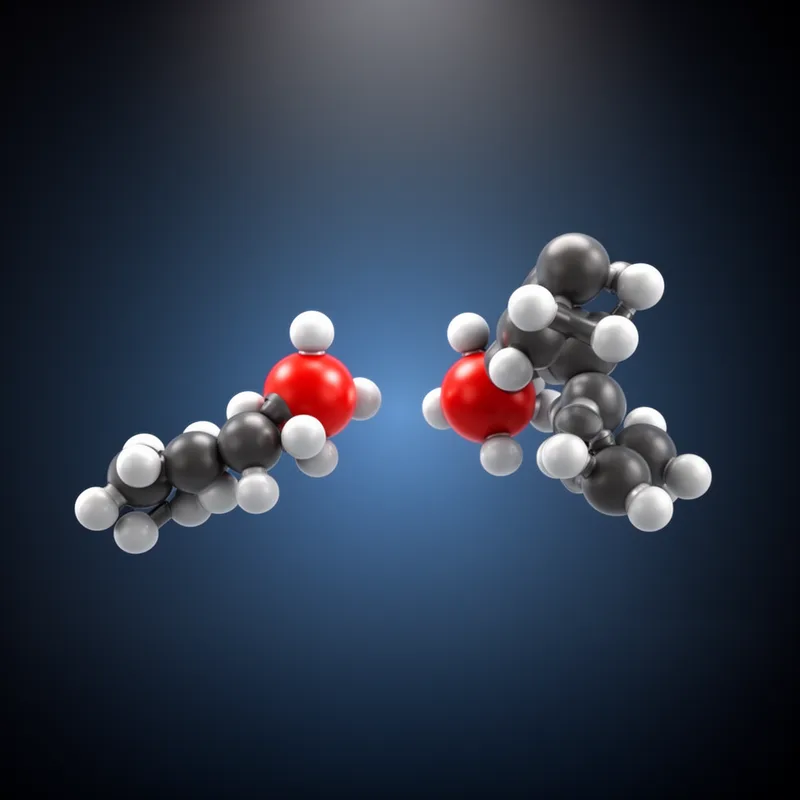
metamerism


 1
9.9
- noun
- /ˌmɛtəˈmɛrɪzəm/
- Specialized
- The professor demonstrated metamerism by comparing several isomers of ethers that have the same chemical formula but distinct structural configurations.
Examples
-
The professor illustrated metamerism using examples of ethers with varying alkyl groups.
-
In organic chemistry, metamerism explains why some compounds have identical formulas but different properties.
-
Understanding metamerism is important for distinguishing between similar-looking chemical compounds.
-
What is metamerism?
-
The concept of metamerism is crucial in organic chemistry.
-
In organic chemistry, metamerism refers to the phenomenon where two chemical compounds share the same molecular formula but differ in the structure of their alkyl groups.
-
The concept of metamerism plays a key role in understanding how different arrangements of alkyl groups can lead to variations in chemical properties.
Synonyms
Compounds that have the same numbers of each atom but different arrangements, giving different properties
Surface Forms
Morphology
metamerism = metamer (opaque) = metamer + ism
The chemistry sense names a technical type of isomerism based on the specialized term 'metamer', which is not accessible to average learners.
Etymology
Metamerism comes from the Greek parts meta- 'change', seen in metamorphosis, and meros 'part'. In chemistry it means molecules have the same formula but different 'parts' placed differently, so they can show different behaviour.