
metacyclic
- adjective
- /ˌmɛtəˈsaɪklɪk/
- Specialized
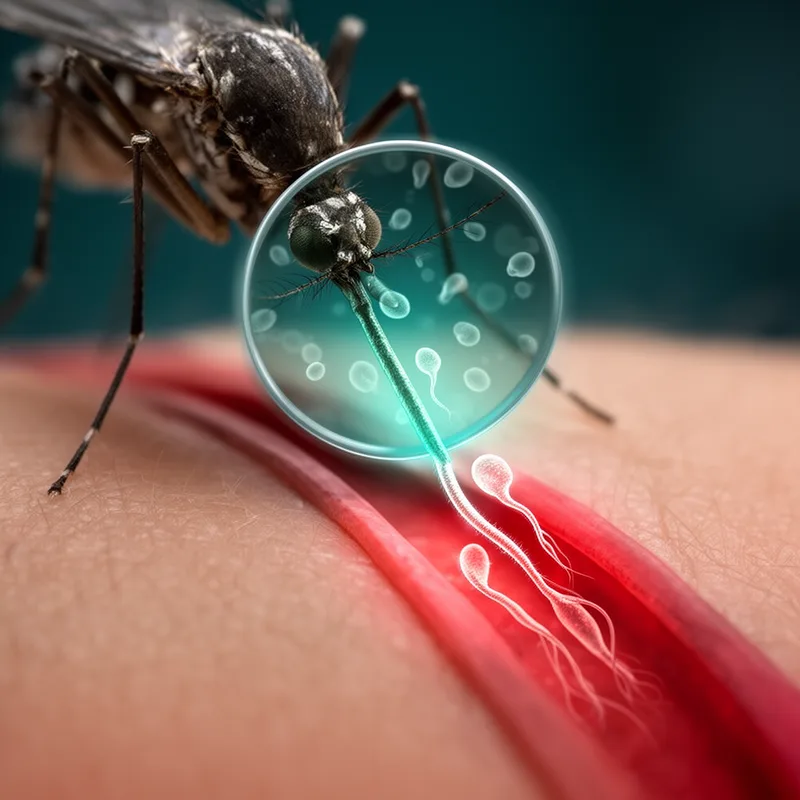
- The metacyclic forms of the parasite are crucial for infection in new hosts.
- metacyclic trypomastigotes
Examples
-
T. cruzi is transmitted to humans primarily through the infected feces of triatomine bugs that contain metacyclic trypomastigotes (vectorial transmission).
Academic text (2013) -
A further consideration to account for the relative lack of infections transmitted through breastfeeding is that, if they occur at all, blood-form trypomastigotes would be expected to occur in human milk and not metacyclic trypomastigotes, which are found in the vector.
Academic text (2013) -
Blood, metacyclic, and culture trypomastigotes are similar in form and structure, but the different forms may have different surface glycoproteins, which are used for cell invasion (17, 37).
Academic text (2013) -
Transmission of T. cruzi by breast-feeding is possible in animal models, but oral infections may be difficult to establish unless metacyclic forms of the parasite are involved. # Studies in Humans #
Academic text (2013) -
Ingestion of food or drink contaminated with vector feces (containing metacyclic trypomastigotes) or crushed insects is the most likely mode of oral infection (36).
Academic text (2013) -
In studies, scientists focused on the metacyclic stage of the parasite's life cycle to understand its transmission.
-
To prevent disease, it is important to minimize exposure to metacyclic forms of certain parasites.
Surface Forms
Morphology
Etymology
Metacyclic combines the parts meta- ('after' or 'beyond') and cyclic ('cycle' or 'stage'). A helpful way to remember it is 'the stage after other stages', and in parasites this often means the form that can infect a new host.

