
mercantilism
 1
9.9
1
9.9

- noun
- /mɜrˈkænˌtɪlɪzəm/
- Formal
- The decline of mercantilism in the 19th century marked a shift towards free trade and economic liberalism.
- mercantilism to industrial capitalism
Examples
-
For instance, the Ottoman elite had no interest in mercantilism and did not even use tariffs to collect revenue.
Academic text (2000) -
By imperialism, protectionism, and mercantilism, nations eventually wither and weaken into third-world stagnation.
Academic text (1991) -
You know, the British practicing mercantilism were passed Navigation Acts saying what ships could carry what and so on.
-
France's historical mercantilism is clearly still alive, as demonstrated by its repeated efforts to hold Japanese competition at bay.
Academic text (1990) -
At the same time, the colonists began to calculate the difference to be gained from being independent from British laws of mercantilism.
Academic text (2017) -
By redirecting American manufacturing capacity to the military-industrial complex, Washington practices its own form of mercantilism.
Blog text (32) -
Instead, traditional balance of power politics, mercantilism, and instrumental nationalism continue all too often to make life "nasty, brutish, and short."
Academic text (2000) -
Eli Heckscher, the leading scholar of mercantilism, once called this part of The Wealth of Nations an emphatic piece of free trade propaganda.
Academic text (1992) -
The beggar-thy-neighbor strategies of mercantilism—of trade as a weapon of the state—will collapse before the strategies of globalization.
Academic text (1991) -
In the 18th century, British policymakers used mercantilism to strengthen the nation's economy through strict trade regulations.
Synonyms

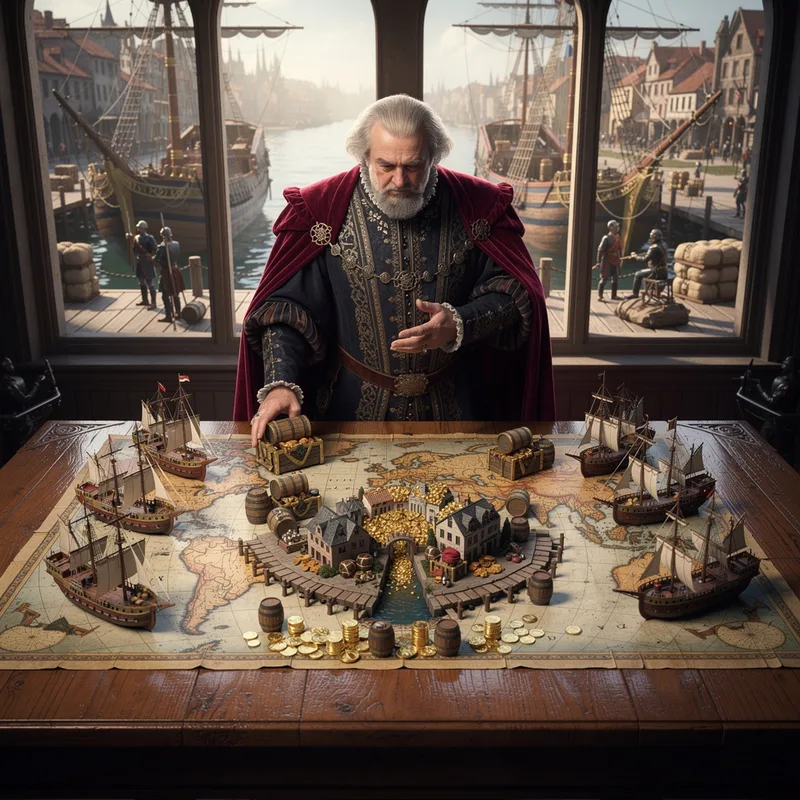
A policy that makes a country richer by controlling trade and keeping gold and silver
Antonyms

Surface Forms
Morphology
mercantilism = mercantile (transparent) = mercantile + ism
The noun denotes a doctrine or system formed by adding '-ism' to 'mercantile' (relating to trade), so the meaning directly follows from the base adjective.
Etymology
The word mercantilism comes from merchant, which comes from Latin mercari meaning 'to trade', plus the ending -ism meaning 'a system or belief'. So, mercantilism is a system that sees trade and merchants as the main way for a country to become richer and more powerful.