
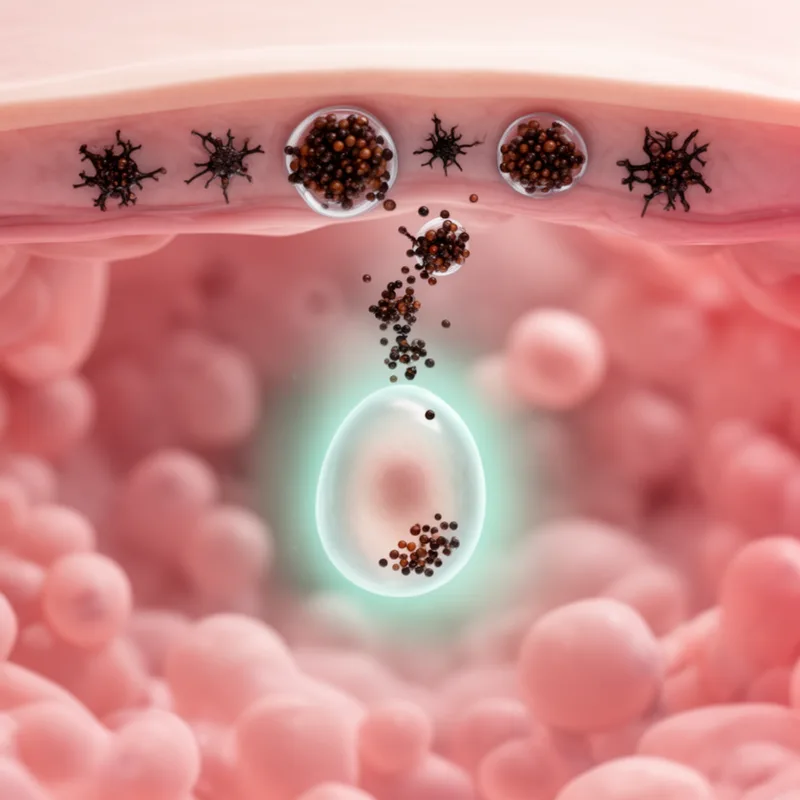
melanoblast
- noun
- /ˌmɛləˈnoʊblæst/
- Specialized
- Researchers studied how melanoblasts differentiate into mature melanocytes.
Examples
-
During embryonic development, melanoblasts migrate to different parts of the skin.
-
Damage to melanoblast cells can result in disorders of pigmentation.
-
The melanoblast is crucial for skin pigmentation.
-
During development, melanoblasts migrate to the skin.
-
Damage to melanoblast cells can result in disorders of pigmentation.
-
Researchers studied how melanoblasts differentiate into mature melanocytes.
-
During embryonic development, melanoblasts migrate to different parts of the skin.
Surface Forms
Morphology
melanoblast = blast (semi-transparent) = melano + blast
Formed from the combining form 'melano-' (black) + '-blast' (immature cell); the formation is regular in biomedical vocabulary but both elements are technical and may be unfamiliar to general learners.
Etymology
Melanoblast comes from the parts melano- meaning 'black' (as in melanin) and -blast meaning 'young cell'. So a melanoblast is an early cell in the developing embryo that will make the dark pigment melanin and later become a melanocyte.

