
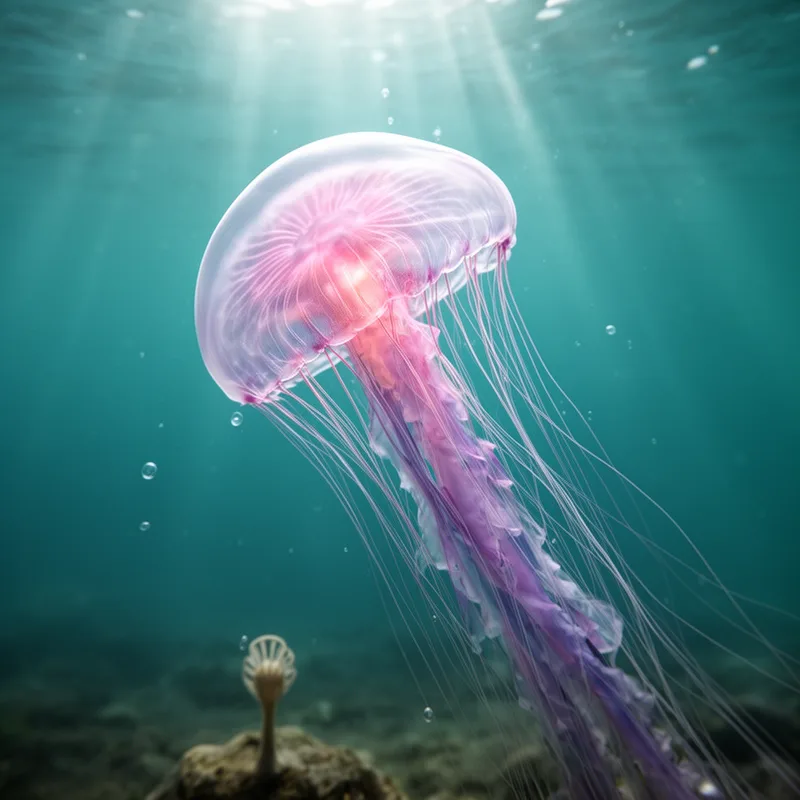
medusan
- noun
- /məˈdjuːzən/
- Specialized
- The Medusan form of the jellyfish drifts gracefully across the ocean's surface, its tentacles trailing behind.
Examples
-
The aquarium's exhibit featured a stunning display of various Medusan species, showcasing their unique umbrella-shaped bodies.
-
During the summer, we often spot the Medusan creatures floating in the shallows, captivating beachgoers with their ethereal beauty.
-
Miles and miles of Medusan chords
-
Miles and miles of Medusan chords
-
We're committing suicide!" he cried, and he gave his dreadlocks a Medusan swirl so that they beat like snakes around his head.
Fiction book (1991) -
Its black spiky Medusan tumult of hair could have outfitted both Mr. and Mrs. Robert Smith, with enough to spare for an heir.
Fiction book (2001) -
He does so, by every account, at Miriam's silent yet implacable behest: a glance from Miriam, her Medusan
Academic text (2012)
Synonyms
 1
9.6
1
9.6

A free-swimming form of some sea animals like jellyfish with umbrella-shaped body and tentacles
A free-swimming stage of some sea animals that has a bell-shaped body and tentacles
Surface Forms
Morphology
Etymology
Medusan comes from Medusa, a woman in Greek myth whose hair was like snakes, because people thought the long tentacles of jellyfish looked the same. So a medusan is the free-swimming 'jellyfish stage' of some sea animals, the stage when they can reproduce.