

meadow grass


 1
3.4
1
3.4
- noun
- /ˈmɛdoʊ ɡræs/
- She raises her arms, the knotted rope bracelets her wrists, her hands are like little white stars fallen into the meadow grass.
Examples
-
The farmer knew that the rich soil would help the meadow grass thrive in the warm summer months.
-
"They're leaving!" she yelled to the barn swallows who dipped and swerved over the green meadow grass.
Fiction book (1990) -
As they talked on, the evening turned blue, light fog brushing the meadow grass.
Fiction book (1992) -
Then she hears the sound of his feet like a scythe, cutting through the meadow grass.
Fiction book (1999) -
Blades and tufts of meadow grass are matted in her long hair.
Fiction book (1998) -
Eyes closed, she feels the hot sun, the vague itch of meadow grass, and hears the insect hum.
Fiction book (1999) -
Here and there in the rock expanse, patches of meadow grass gleamed, like the lawns of marmot estates.
Fiction book (1991) -
The higher fringe of milkweed, meadow grass, and birch, taking the breeze from the water, channeling it into streaks—and then the circle of pines.
Fiction book (2000) -
The long meadow grass swayed gently in the breeze, creating a soothing sound.
-
Children played happily in the field, running through the tall meadow grass that surrounded them.
Synonyms
 521
1.0
521
1.0
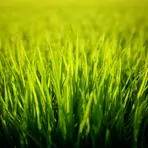
A low green plant with narrow leaves that covers fields and lawns and is often eaten by animals
 1
4.9
1
4.9
A grass with narrow bluish green leaves often used for lawns
 1
6.9
1
6.9
A grass with a sweet smell that grows near water
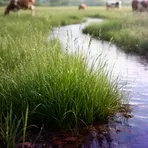
Grass that grows in meadows and wet places

A thin grass that grows every year in shady places like woods

A grass that grows in wet fields and marshes and provides grazing for cattle
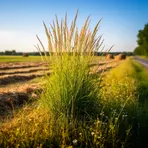
A tall rough grass that grows in meadows and roadsides and is used for hay
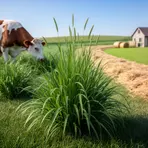
A grass that lives for many years with wide flat leaves grown for animal grazing, hay, and lawns
How Tall

Surface Forms
Morphology
The meaning 'a type of grass that grows in meadows' is directly and predictably derived from composing 'meadow' (land of grasses) and 'grass' (green narrow-leaved plants); it is a straightforward noun–noun compound indicating type/location. This compositional pattern is common across languages and follows basic English compounding rules, so a B1 learner who knows both constituents will readily understand it.
Etymology
Meadow grass comes from a simple picture: the grass that grows in a meadow, often in wet fields and used as food for animals. Because people long used this name for those plants, it now means 'a type of grass' found in meadows.