
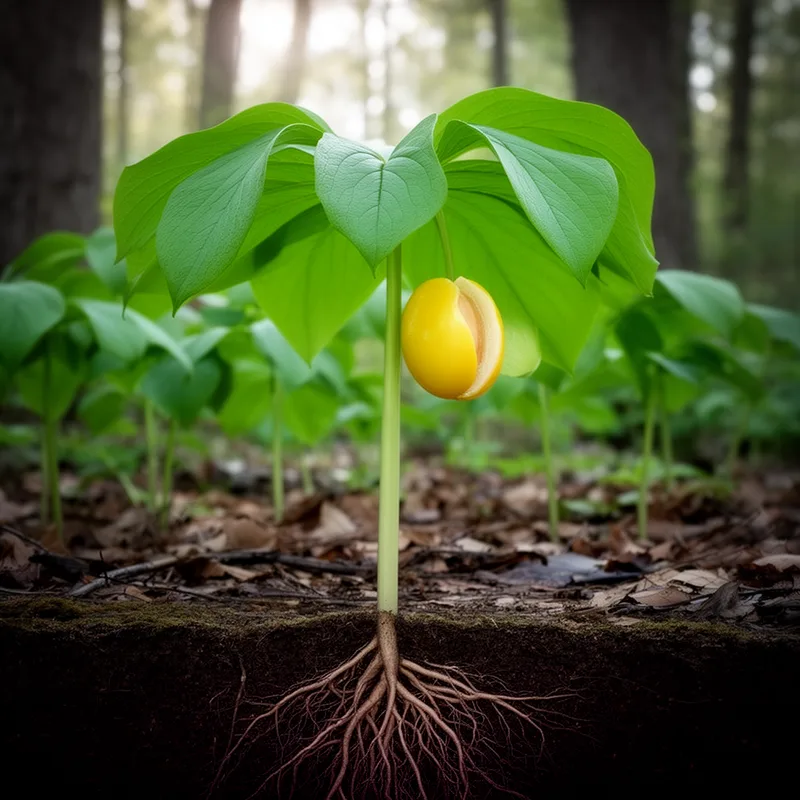
mayapple


 1
9.9
- noun
- /ˈmeɪˌæpəl/
- US
- Although the mayapple fruit is edible when ripe, other parts of the plant are poisonous.
Examples
-
In May, the vibrant yellow fruit of the mayapple appears beneath its large umbrella-like leaves.
-
The mayapple blooms early in the spring, covering the forest floor with its distinctive umbrella-shaped leaves.
-
We spotted several mayapple plants along the woodland trail during our hike.
-
The mayapple grows in shady areas of the forest.
-
I spotted a mayapple while hiking last weekend.
-
Only the tender pulp of the mayapple is edible; the rest, including the seeds, is poisonous.
-
The mayapple thrives in wooded areas, with its distinctive leaves providing shade for the forest floor.
Synonyms
 1
9.9
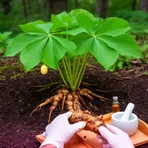
A plant that lives for many years with large umbrella-shaped leaves used in medicine
 1
9.9
A North American plant with large umbrella leaves, a poisonous root, and an edible yellow fruit
 1
9.9
A low North American woodland plant with poisonous roots and fruit you can eat but that tastes bland

A North American plant with a poisonous root and a mild edible fruit
Surface Forms
Morphology
Etymology
Mayapple joins May 'the month when it flowers' and apple 'because its yellow fruit looks like a small apple', so the name points to the time it blooms and its apple-like fruit.