

maxillary vein
- noun
- /ˈmæksɪˌlɛri veɪn/
- Specialized
- The maxillary vein drains blood from the face.
Examples
-
During the surgery, the doctor carefully avoided damaging the maxillary vein.
-
The maxillary vein plays a significant role in draining blood from the deep structures of the face.
-
An obstruction in the maxillary vein can cause swelling and discomfort in the jaw and cheek area.
-
Surgeons must be careful near the maxillary vein during procedures.
-
An obstruction in the maxillary vein can cause swelling and discomfort in the jaw and cheek area.
-
During the surgery, the doctor carefully avoided damaging the maxillary vein.
-
The maxillary vein plays a significant role in draining blood from the deep structures of the face.
Synonyms
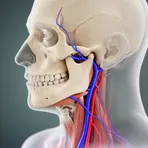
A vein behind the jaw that joins the superficial temporal vein to form the retromandibular vein
Surface Forms
Morphology
The phrase is a straightforward anatomical noun phrase: 'maxillary' (relating to the upper jaw/face) combined with 'vein' (a blood vessel) yields 'a vein of the upper jaw/face.' This adjective+noun compositional pattern is common in medical terminology and across languages, so a learner who knows both constituents can directly infer the meaning.
Etymology
Maxillary vein comes from the word maxilla meaning 'jaw' and vein meaning 'blood vessel'. So it literally names the vein that runs near the upper jaw and cheek and drains blood from that part of the face.

