

mastocyte
- noun
- /ˈmæstəˌsaɪt/
- Archaic
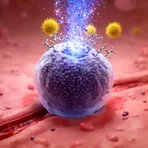
- Mast cells, also known as mastocytes, play a crucial role in allergy responses.
Examples
-
The release of histamine by mastocytes can trigger itching and swelling.
-
Scientists observed an increase in mastocytes in inflamed tissue samples.
-
A mastocyte is crucial for immune responses.
-
The mastocytes release histamine during allergic reactions.
-
Scientists observed an increase in mastocytes in inflamed tissue samples.
-
The release of histamine by mastocytes can trigger itching and swelling.
-
The mastocytes release histamine during allergic reactions.
Synonyms
 1
5.6
1
5.6

A large cell in body tissue that releases chemicals during allergic reactions and inflammation

A large cell in the body's connective tissue that releases chemicals like histamine, heparin, and serotonin during allergic reactions
Surface Forms
Morphology
mastocyte = mast cell (semi-transparent) = masto + cyte
The word denotes a type of cell (the '-cyte' element corresponds to 'cell'), but the combining forms 'masto-' and '-cyte' are technical and not transparently meaningful to an average B1 learner.
Etymology
The word mastocyte comes from the German mast meaning 'fattening' and the Greek part -cyte meaning 'cell'. It was named because these cells looked full of tiny packets, as if 'well fed', and today a mastocyte is a cell that stores chemicals like histamine and helps cause allergy and swelling.