
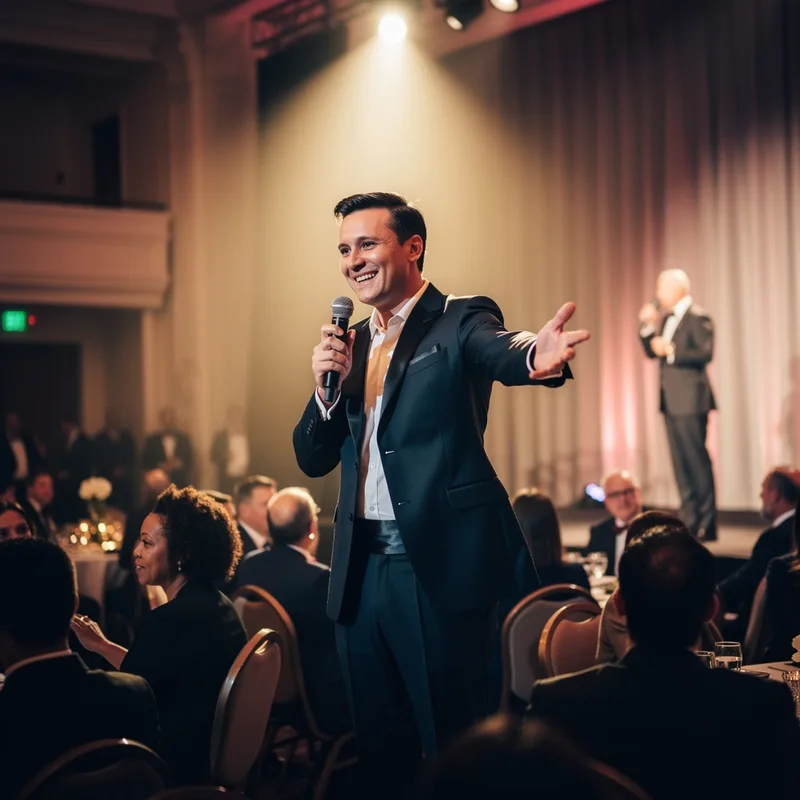
master of ceremonies
 6
4.2
6
4.2

- noun
- /ˈmæstər əv ˈsɛrəˌmoʊniz/
- Formal
- As the master of ceremonies, she ensured that each speaker was introduced smoothly and the audience stayed engaged.
Examples
-
With the master of ceremonies entering the stage, it was time to start the celebration of knowledge.
Fiction book (2001) -
As the master of ceremonies began to announce the first category, Mark leaned over.
Fiction book (1996) -
His voice was the voice of a professional master of ceremonies.
Fiction book (1996) -
"Minister," the master of ceremonies said.
Fiction book (2001) -
Ladies and gentlemen, Mr. Hammer will now act as master of ceremonies.
-
I was invited to be the master of ceremonies at the Rally for Reason.
Academic text (2007) -
David McIntosh, the Vice Chairman and Founding Director of the Federalist Society, served as master of ceremonies.
Blog text (31) -
The Sawyer Business School's dean, William J. O'Neill Jr., was the master of ceremonies for the luncheon.
Blog text (25) -
Ladies and gentlemen, Mister Van Morrison! shouted the master of ceremonies at the Winterland Theater in San Francisco.
Academic text (2001) -
Janie Ruth Hatton, National Association of Secondary School Principals/Met Life Principal of the Year, served as master of ceremonies.
Academic text (1993)
Synonyms
 762
2.1
762
2.1
A person or organization that welcomes and looks after guests at an event
 258
3.1
258
3.1
A person who leads a meeting or committee
 21
7.5
21
7.5
A person who hosts an event and introduces speakers or performers
 16
6.5
16
6.5
A person who introduces speakers and keeps a formal event running
 11
3.2
11
3.2
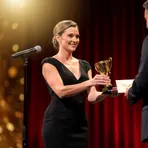
A person who gives items or announces people at a ceremony
 11
6.0
11
6.0
A person who introduces performers and directs acts in a circus
 4
3.2
4
3.2
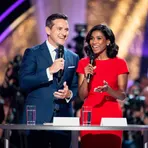
A person who leads a show or event together with another person
 3
6.1
3
6.1
A person who leads a meeting and makes sure it runs correctly
 1
7.5
1
7.5
A person who introduces speakers and asks people to raise their glasses at a formal event
 1
7.3
1
7.3
A person who leads a meeting, ceremony, or event


 1
9.9
1
9.9
A man who welcomes and looks after guests at an inn

A person who leads a dinner, gives toasts and introduces speakers
Antonyms


How Public

Surface Forms
Morphology
The phrase is compositionally built from 'master' (a person in charge) + 'of' (linking) + 'ceremony' (formal event), so its meaning 'the person who runs or hosts a ceremony' follows directly from the constituents. This noun + of + noun pattern is common across languages and in English (e.g., 'master of ceremonies' ~ 'maître de cérémonie'), so a B1 learner who knows the parts will very likely infer the meaning.
Etymology
Master of ceremonies comes from old times when a master, a person in charge, ran formal ceremonies like church services or royal events and told people what to do and who should speak. So it now means 'a host who guides a formal event'.