

masque
 3
9.9
3
9.9

- noun
- /mæsk/
- Archaic
- At the grand masque, guests donned elaborate costumes and masks to celebrate the occasion.
Examples
-
You wish me... to go to a masque?
-
What if the masque were performed by my company of wits, the Bedlamites?
-
Tomorrow, at the masque, I shall make it known to the world.
-
Had the man never seen a masque before?
Fiction book (1993) -
"Aye, I went to the masque," he said.
Fiction book (1993) -
"Were you at the masque two days ago, my lord?" the councilor asked.
Fiction book (1993) -
Anyone who hadn't been at the masque, therefore, would be suspect.
Fiction book (1993) -
The masque is ended.
Academic text (2017) -
Colby was to write a masque for the fete Lord Mortimer is giving.
-
Then suddenly, a palazzo blazing with light, a masque in someone's house.
Fiction book (1999)
Synonyms
 41
6.4
41
6.4
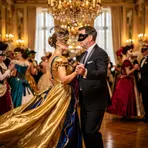
A party where people wear costumes and face coverings, often with dancing
 14
6.8
14
6.8
A party where people wear masks and fancy costumes
 4
4.8
4
4.8
A formal party where guests wear masks and costumes to hide who they are
 2
4.3
2
4.3
A formal party where people wear masks and fancy costumes
 1
4.3
1
4.3
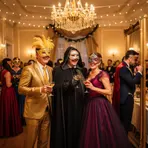
A party where people wear masks and costumes to hide who they are
Surface Forms
Etymology
Masque comes from old French and Italian words that mean 'mask', and it shares the same root as the everyday English word mask. In the 1500s and 1600s a masque was a royal show where people wore masks and costumes, which is why the word means that kind of masked entertainment.