
masking paper
- noun
- /ˈmæskɪŋ ˈpeɪpər/
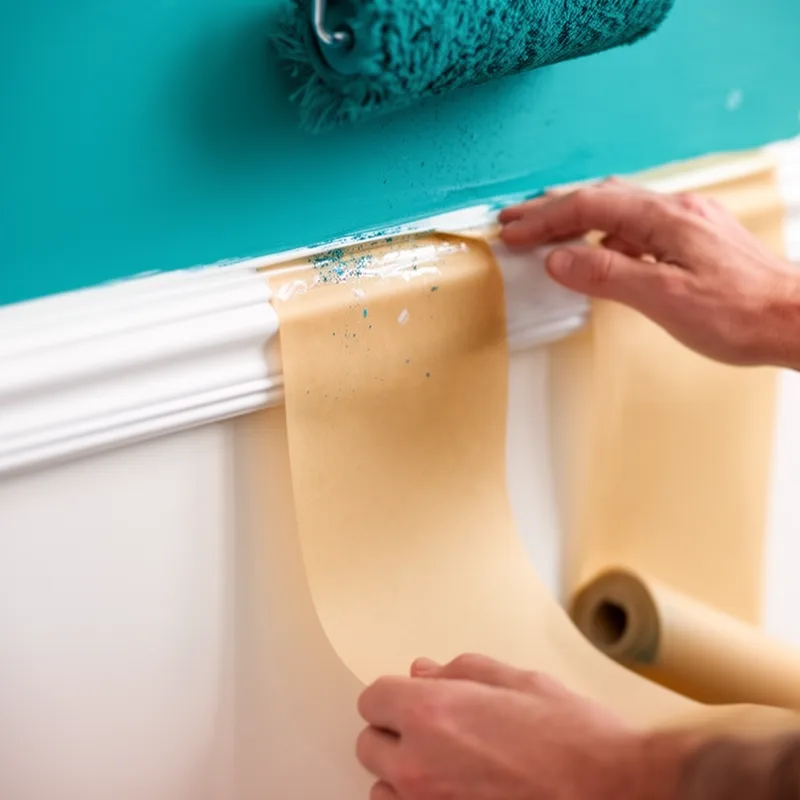
- Before spraying the walls, she carefully put masking paper on the skirting boards.
Examples
-
Always remove the masking paper slowly to avoid peeling off fresh paint.
-
The painter applied masking paper along the window edges to keep them clean.
-
I need some masking paper for my painting project.
-
The artist uses masking paper to create sharp lines.
-
The painter used masking paper to protect the trim while applying a fresh coat of paint on the walls.
-
Before starting the project, she carefully placed masking paper around the edges to prevent splatters.
-
To achieve clean lines, it's essential to apply masking paper along the areas you don't want to paint.
Synonyms

 5
2.8
5
2.8

A thin sticky tape for covering parts before painting or holding things temporarily
How Protective

Surface Forms
Morphology
The meaning 'a paper used to cover parts to protect them from paint' is directly derivable from combining 'masking' (covering/blocking) with 'paper' (sheet material). This simple noun-compound describes the item's function in a literal, compositional way that a B1 learner who knows both constituents would readily infer.
Etymology
Masking paper gets its name from the words masking (to cover like a face mask) and paper (a thin sheet). Painters put this paper over parts of a wall or window to keep paint off them, so the name shows it 'masks' or 'protects' those areas.