
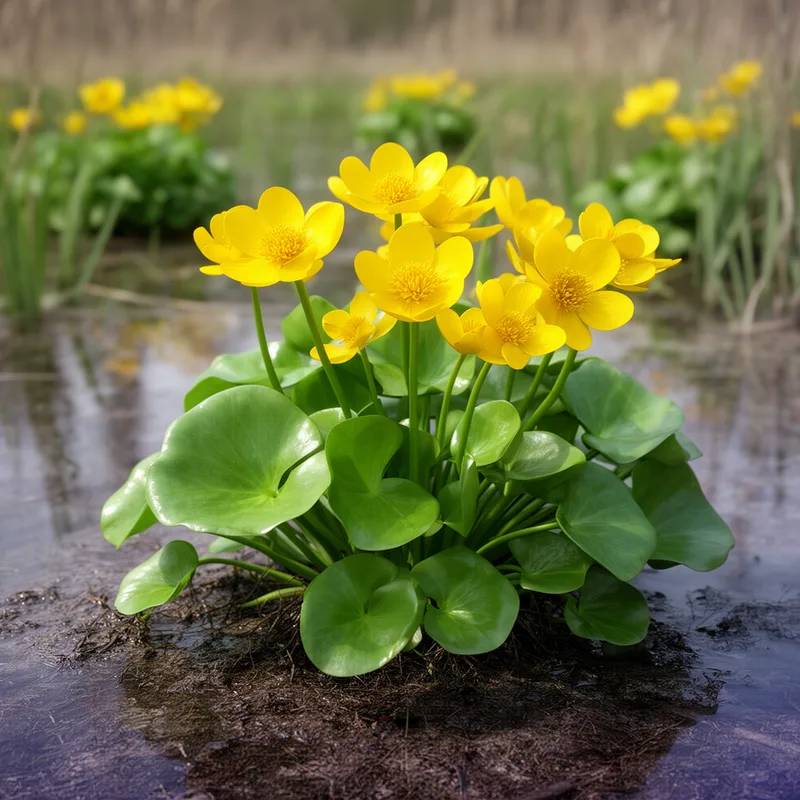
marsh marigold


 1
6.7
1
6.7
- noun
- /mɑrʃ ˈmɛrɪˌɡoʊld/
- UK
- Common plants include sweet flag, water plantain, purple avens, blue iris, marsh marigold, sundrops, water smartweed, and several kinds of white-flowered aster.
- marsh marigold and skunk
- marsh marigold and skunk cabbage
Examples
-
Brooklime and flag iris, plantain and marsh marigolds rioted on the banks.
-
Fall asters, boneset, marsh marigolds, jewelweed, and grand lobelia are blooming in the wildlife corridors we established along the small streams.
Blog text (30) -
Other plants are blue marsh violet, creeping snowberry, marsh marigold, northern St. Johnswort, swamp saxifrage, and Virginia marsh St. Johnswort.
Academic text (2011) -
The bright yellow flowers of the marsh marigold create a stunning contrast against the green foliage in wetland areas.
-
In spring, clusters of marsh marigold brighten the swamp with their cheerful yellow blooms.
-
Wildlife often forage among the marsh marigold, attracted by its vibrant flowers during the summer months.
Synonyms

A plant with bright yellow flowers that grows in marshes

A plant that grows in wet places with bright yellow flowers like buttercups
A plant with bright yellow flowers like buttercups that grows in wet places

A plant with bright yellow flowers that grows in wet places like ponds
Surface Forms
Morphology
The meaning is directly compositional: 'marsh' (wetland) combined with 'marigold' (a yellow-flowered plant) yields a marigold that grows in marshy or swampy areas, so a B1 learner knowing both constituents can infer the referent. This habitat + plant naming pattern is common and follows standard English compounding, making the expression transparent.
Etymology
Marsh marigold comes from a simple picture: it grows in a marsh, which is wet ground, and it has bright yellow flowers like a small marigold. So the name helps you remember that this is a yellow flower that lives in wet places.