

marsh gentian


 1
9.9
1
9.9
- noun
- UK
- The marsh gentian blooms early in the summer across the heathlands.
Examples
-
The marsh gentian blooms beautifully in summer.
-
Conservationists are working to protect the habitat of the rare marsh gentian.
-
We spotted a beautiful marsh gentian while hiking near the wetlands.
-
I spotted a marsh gentian while hiking in the wetlands.
-
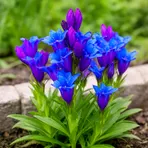
The marsh gentian is known for its striking sky-blue flowers that bloom in the summer.
-
Gardeners often seek out the marsh gentian for its beautiful funnel-shaped blooms in damp areas.
-
In the wet heathlands of Eurasia, the marsh gentian thrives and attracts many pollinators.
Synonyms
 1
9.5
1
9.5
A flowering plant with bright blue or purple tube-shaped flowers

A plant with bright blue funnel-shaped flowers that grows in wet meadows and heaths in Europe

A plant that lives for several years with sky-blue, funnel-shaped flowers that grows on damp open moorland
Surface Forms
Morphology
The compound is fully compositional: 'marsh' names the wetland habitat and 'gentian' names the flowering plant, so the phrase denotes a gentian that grows in marshes. This noun–noun attributional pattern is common across languages and follows regular English compounding, so a B1 learner who knows both constituents can readily infer the meaning.
Etymology
Marsh gentian gets its name from marsh, meaning 'wet land', and gentian, a plant name that, one popular story says, comes from an old king called Gentius who used the plant as 'medicine'. So the name gives a clear picture: a blue gentian that lives in wet places.