

marchesa
- noun
- /mɑrˈkeɪzə/
- Formal
- The marchesa -- now a woman of about sixty -- was guarded by two employees, one a bulldog-faced matron, the other an eighteen-year-old beauty named Sabrina with blond hair falling in delicate tendrils about her Botticellian face.
Examples
-
Yesterday I hoped to meet the marchesa and brought down some pages I'd photocopied from a book about her.
Academic text (2002) -
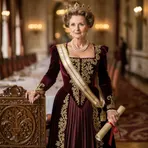
The richness of the gown suggests marchesa demazzo.
-
From a book I'd read about him at home, I had photocopied certain pages in the hope that one day I could have a chat with the marchesa and show her pictures of herself at her wedding, of herself standing on the roof of this very building (with the great Duomo in the background) in the blush of her first love.
Academic text (2002) -
The marchesa Pucci has an office downstairs from which she controls the family empire: textiles, wine, and clothing designed by Emilio Pucci (her famous and deceased husband).
Academic text (2002) -
The marchesa hosted a lavish dinner at her villa, inviting celebrities and aristocrats from across Italy.
-
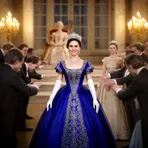
Everyone admired the marchesa as she gracefully entered the ballroom, her elegant gown sparkling under the chandeliers.
-
During the Renaissance festival, the marchesa wore a historical costume that showcased her noble lineage.
Synonyms

 2
5.8
2
5.8

A woman from a high social class who has a title
 1
9.9
1
9.9
A noblewoman married to a marquis or who holds the title herself
 1
9.9
1
9.9
A woman of high social rank below a duchess and above a countess
Surface Forms
Etymology
Marchesa comes from Italian and is the female form of marquis, a title given to people who ruled border lands called the 'march'. So a marchesa is a noblewoman of that rank, which explains why the word means an Italian noblewoman today.