
mandibulate
- adjective
- /mænˈdɪbjʊlɪt/
- Specialized
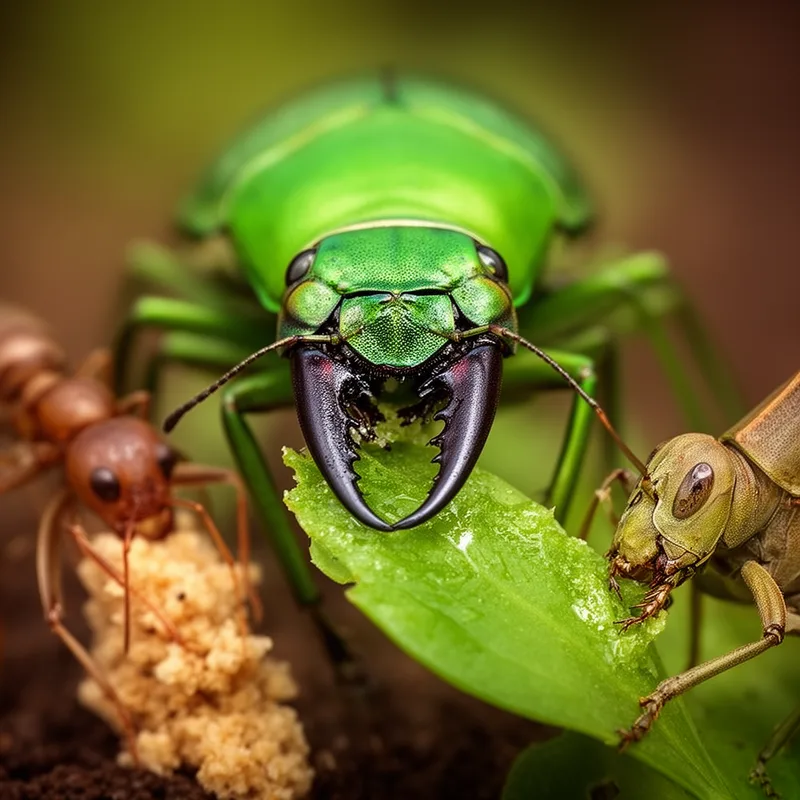
- Most insects are classified as mandibulate because they have jaw-like mouthparts for biting or chewing.
Examples
-
The mandibulate insects can easily break down tough plant materials.
-
The mandibulate structure of beetles allows them to consume a wide variety of foods.
-
Most insects are classified as mandibulate because they have jaw-like mouthparts for biting or chewing.
-
Scientists compared the feeding habits of mandibulate and non-mandibulate arthropods.
-
Many mandibulate species play crucial roles in their ecosystems.
-
The mandibulate structure of beetles allows them to consume a wide variety of foods.
-
Scientists compared the feeding habits of mandibulate arthropods to understand their ecological roles.
Synonyms

 15
6.1

An animal with parts of the mouth that bite and chew
Surface Forms
Morphology
Etymology
Mandibulate comes from the Latin word mandibula, which means 'jaw', and shares the same root as the common word mandible; so a mandibulate animal is one that has jaw-like mouthparts used for biting or chewing.