
mand
 1
9.9

- noun
- /mænd/
- Jargon
- Mands were defined as vocal requests for relevant reinforcers specific to each condition.
- levels of mands
- Mand -- verbal
- independent mands
Examples
-
Once a learner consistently responded to mand-model, a time delay in delivering the mand was implemented to fade the spoken prompt.
Academic text (2014) -
Following the implementation of treatment, rates of problem behavior decreased to low and stable levels, and mands for attention maintained at moderate levels.
Academic text (2014) -
In mand-model procedures, a verbal instruction to respond "What do you want?" was delivered.
Academic text (2014) -
However, the rate of problem behavior and mands in the relevant sessions was very efficient, occurring at a rate of about 2 responses per minute.
Academic text (2014) -
Problem behavior maintained at low levels (below an 80% reduction from baseline), and compliance and mands maintained at moderate to high levels.
Academic text (2014) -
According to Michael's parents and inpatient teachers, he had a history of manding for assistance with completing work, and as a result, his mand was reinforced; the authors had observed this behavior occurring in the natural school settings as well.
Academic text (2014) -
The dependent variables were instances of problem behavior (aggression and property destruction) and appropriate behavior (mands for relevant reinforcers, e.g., attention, preferred tangibles, and compliance).
Academic text (2014) -
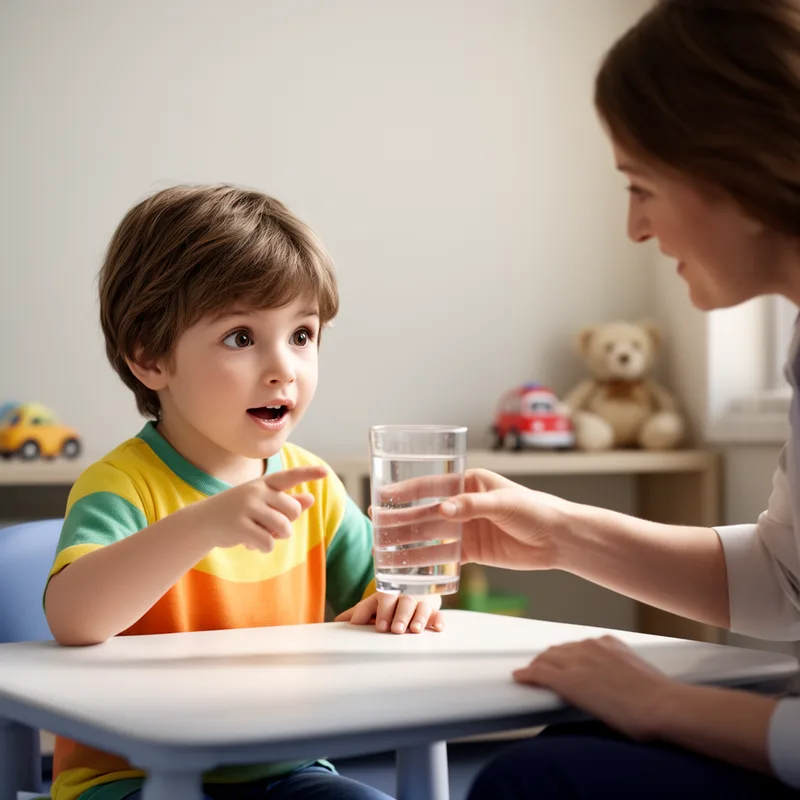
During the therapy session, the therapist encouraged the child to make a mand for a toy by saying, "What would you like to play with?"
-
In behavioral training, teaching a child to use a mand can help them express their needs effectively.
-
The teacher noticed that when the students used a mand, they were more likely to receive the help they needed.
Surface Forms
Etymology
Mand is a term from behavior science that comes from the same idea as demand and command, so think of it as a short form of those words. It means a spoken 'request' or 'order' to get something, which is why a child's mand can be asking for a toy or for water.