
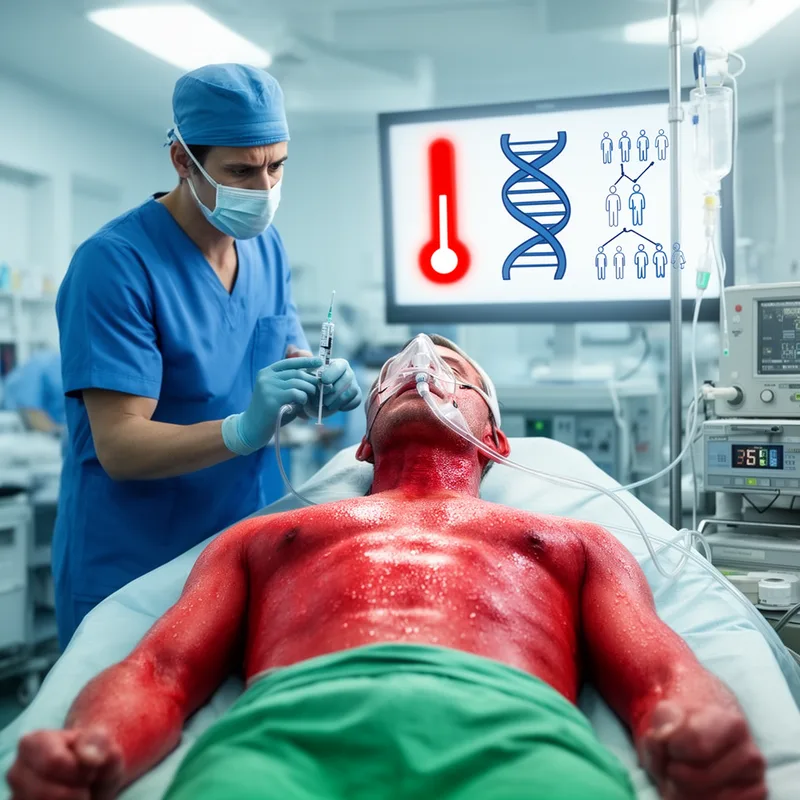
malignant hyperthermia
- noun
- /məˈlɪɡnənt ˌhaɪpərˈθɜrmiə/
- Specialized
- Prompt treatment with dantrolene is essential if malignant hyperthermia develops during surgery.
Examples
-
Because her brother had experienced malignant hyperthermia, extra precautions were taken for her operation.
-
The patient was diagnosed with malignant hyperthermia after surgery.
-
The anesthesiologist carefully screened patients for a history of malignant hyperthermia before administering anesthetics.
-
Is malignant hyperthermia common among patients with certain genetic backgrounds?
-
If a patient has a family history of malignant hyperthermia, they should inform their anesthesiologist before undergoing surgery.
-
Doctors must be vigilant for signs of malignant hyperthermia during surgery to prevent life-threatening complications.
-
During surgery, the risk of malignant hyperthermia can increase if the patient is exposed to certain anesthetic drugs.
How Dangerous
- Specialized

- Specialized
 2
7.5
2
7.5
 390
1.0
3
2.1
390
1.0
3
2.1
Surface Forms
Morphology
The compound directly combines 'malignant' (harmful/serious) with 'hyperthermia' (elevated body temperature), so a learner who knows both constituents would readily infer it denotes a dangerous or severe high body temperature. Clinical specifics about causes, inheritance, and muscle rigidity are specialized and not predictable from the words, but the core meaning is compositionally transparent.
Etymology
The medical term malignant hyperthermia comes from its parts: malignant meaning 'very harmful' and hyperthermia meaning 'too high temperature'. So the name describes a dangerous rise in body heat and muscle stiffness during surgery, which is why it means a rare, serious reaction to some anesthetics.