

male hypogonadism
- noun
- /meɪl haɪpoʊɡəˈnædɪzəm/
- Specialized
- Male hypogonadism is the clinical syndrome resulting from the inability to produce physiological concentrations of testosterone, normal amounts of sperm, or both.
Examples
-
Male hypogonadism is related to an increase in associated cardiometabolic complications, such as hypertension, type 2 diabetes mellitus, the metabolic syndrome, and cardiovascular disease.
Academic text (2018) -
Male hypogonadism associated with obesity is a very prevalent condition and is increasing in parallel with the epidemic prevalence of obesity.
Academic text (2018) -
Involved in the relationship between male hypogonadism and obesity.
Academic text (2018) -
Obesity is considered the most frequent cause of male hypogonadism.
Academic text (2018) -
Male hypogonadism can lead to a decrease in male hypogonadism sexual desire and energy levels.
-
Doctors often diagnose male hypogonadism through blood tests that measure hormone levels.
-
Treatment for male hypogonadism may include hormone replacement therapy to restore normal hormone levels.
Synonyms



 1
9.9
1
9.9
A condition in which the sex glands do not make enough hormones, causing weak development of adult body features
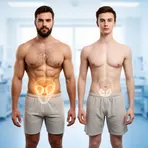
A condition in males where the testicles are missing or do not work so adult sexual traits do not develop
Surface Forms
Morphology
This is a straightforward noun–noun compound where 'male' specifies the sex affected and 'hypogonadism' names the medical condition; if a learner knows 'hypogonadism' as low sex hormone levels, the combined meaning is directly derivable. The compound follows regular, cross-linguistically common modification patterns (sex + medical condition), so it is transparent for learners who know both constituents.
Etymology
The word male hypogonadism comes from three parts: male, hypo- and gonad, which mean 'male', 'under', and 'sex gland'. Hypo- means 'under' and gonad means 'sex gland' or 'testicle', so the phrase literally describes a man whose sex glands are not active enough and that is why it means 'not making enough sex hormones'.