
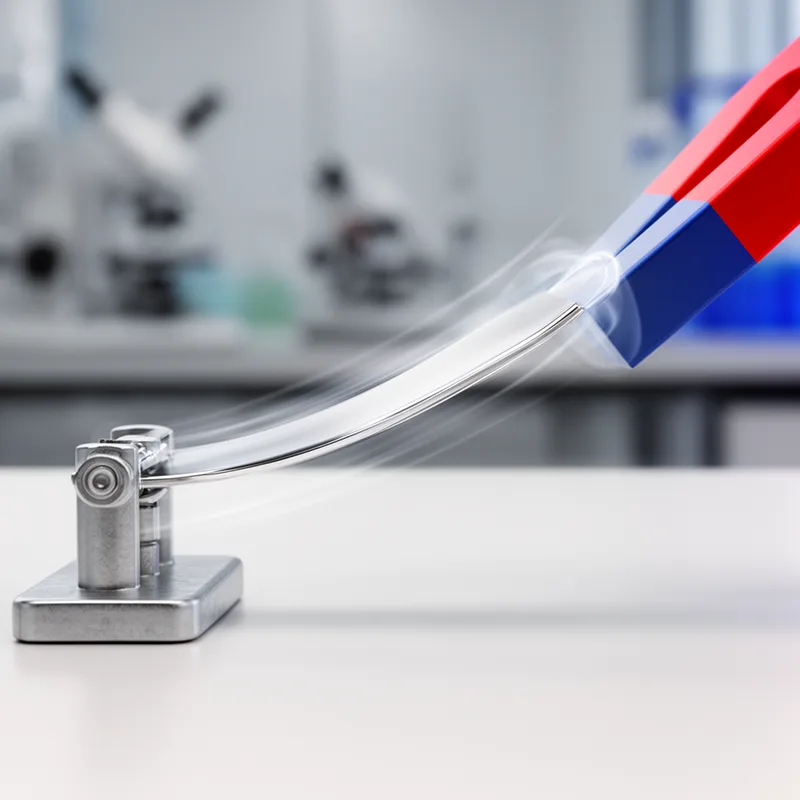
magnetostrictive
- adjective
- /ˌmæɡnɪtoʊstrɪktɪv/
- Specialized
- Engineers use magnetostrictive sensors to measure pressure changes in various environments.
Examples
-
He has made major contributions to the active/smart materials field with his pioneering work on piezoelectric devices, magnetostrictive composites, thin film shape memory alloys, and fiber optic sensors.
Academic text (2003) -
By adding a gradient upload capability to its digital pulse output model EP2, MTS is enhancing its E-Series of Temposonics magnetostrictive position sensors.
Academic text (2005) -
Not an easy thing to do, but they came up with a kind of magnetostrictive delay line memory that was just a fraction of the size of other memory modules.
Blog text (34) -
In addition to being an active mentor, advisor, and educator, and receiving Director's Awards while at the NSF for outstanding contributions in managing the foundations-wide NSF Career Program, Alison Flatau has made significant technical contributions to research on magnetostrictive transduction and the field of smart structures.
Academic text (2007) -
magnetostrictive materials change shape when they are exposed to a magnetic field.
-
The researchers developed a magnetostrictive alloy that expands and contracts with magnetic stimulation.
Compounds
- Specialized
A device that makes sound by metal changing shape in a magnetic field, often used in underwater devices
Surface Forms
Morphology
magnetostrictive = magnetostriction (semi-transparent) = magneto + striction + ive
Formed by a standard adjectival suffix '-ive' from the noun 'magnetostriction', so the relation to the base noun is direct and regular.
Etymology
The word magnetostrictive comes from magneto- meaning 'magnet' and -strict meaning 'to tighten', as in constrict. So it describes materials that change shape or size when a magnet acts on them, as if the magnet 'presses' or 'tightens' the material.

